

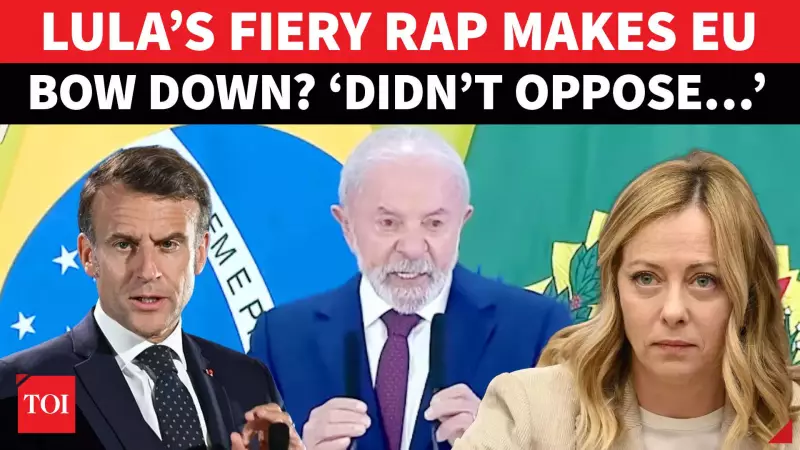
In a significant revelation, Brazilian President Luiz Inácio Lula da Silva has stated that Italy is not fundamentally opposed to the long-pending trade agreement between the European Union and the Mercosur bloc. This clarification comes amid widespread perceptions that European nations, including Italy, were blocking the historic pact.
Meloni's Private Assurance to Lula
President Lula disclosed that Italian Prime Minister Giorgia Meloni gave him a private assurance during their discussions. According to Lula, Meloni conveyed that Rome "is not opposed" to the trade deal. However, she highlighted a pressing domestic challenge: the need to calm significant unrest among Italian farmers who are protesting against the agreement's potential impact.
Lula quoted Meloni as describing the situation as a "political mess" within Italy's agricultural sector. The Italian leader reportedly asked for a window of "days or weeks" to secure domestic backing and manage the internal political fallout before moving forward.

France's Firm Opposition and the Deal's Stakes
While Italy's position appears negotiable, France remains a formidable obstacle. President Lula confirmed that France, under President Emmanuel Macron, is firmly opposed to the deal. Despite repeated talks, Macron remains unconvinced, presenting a major hurdle for the agreement's ratification.
The President passionately argued for the deal's importance, emphasizing its massive scale. The pact would create a trade zone covering a combined population of 722 million people and an economic powerhouse worth $22 trillion. Lula made the case that the terms are "more favorable to the EU than Mercosur," suggesting the European bloc stands to gain significantly.
A Crucial Test for Global Trade
Lula framed the 26-year-long negotiation process as a critical test for the world's commitment to multilateral trade systems. After nearly three decades of talks, finalizing this agreement is seen as vital for defending the principle of multilateralism in an increasingly fragmented global economy.
The statement from the Brazilian leader, made on December 19, 2025, injects new perspective into the stalled negotiations. It shifts the focus from Italy's outright rejection to a plea for more time to handle domestic agricultural politics, while identifying France as the primary point of resistance.






