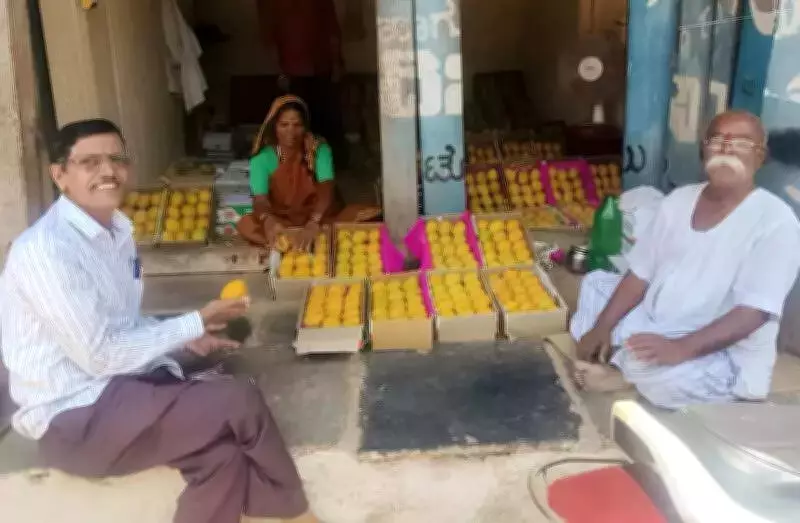
Gulf Conflict Disrupts Traditional Mango Export Routes, Forces Market Diversification
The escalating conflict in the Gulf region has created significant uncertainty for mango growers in Karnataka's key producing districts of Dharwad, Belagavi, and parts of Haveri. With the new mango season just weeks away, this geopolitical tension is forcing a major strategic shift in export patterns that could reshape the industry's international footprint.
Decade-Long Gulf Dependence Now Under Threat
For over ten years, premium Alphonso-quality mangoes from this region have enjoyed a stable and profitable market across Gulf countries including the United Arab Emirates, Iran, Kuwait, and Iraq. These exports have formed the financial backbone for numerous growers throughout northern Karnataka. However, the current conflict between Israel and Iran, coupled with broader regional instability, has created unprecedented uncertainty about established trade routes and demand patterns.
"Exports to the Gulf have been our primary revenue source for years," explained Dr. Anand Patil, a dentist and mango grower from Dharwad. "The current situation has generated considerable confusion, making it impossible to depend entirely on those traditional markets this season."

Visible Impact on Ground Operations
The practical consequences are already evident across the region's orchards. Traders from major hubs like Vasai and Surat, who typically visit early each year to book produce for Gulf exports, have significantly reduced their activity this season. Many growers report that customary advance payments have not materialized, leaving them uncertain about their primary buyers just as the harvest approaches.
This hesitation from traditional buyers has created immediate financial pressure on growers who have long structured their operations around predictable Gulf demand cycles.
Strategic Pivot to Alternative Markets
With Gulf markets increasingly unreliable, growers and trade associations are actively pursuing alternative international destinations. The Mango Growers Association is spearheading efforts to expand exports to the United States, United Kingdom, and Singapore. This diversification strategy has already yielded tangible results, with Singapore placing an order for 200 metric tonnes of Karnataka mangoes.
"We perceive this situation as an opportunity for diversification rather than merely a setback," stated Dr. Rajendra Poddar, honorary president of the Mango Growers Association. "Heavy reliance on any single region inherently carries significant risk. The current crisis is compelling us to open doors to new global markets that offer greater long-term stability."
Navigating New Market Challenges
Negotiations are currently underway with traders in Delhi and Mumbai to facilitate exports to Western markets. However, significant challenges remain, particularly in understanding complex tariff structures and meeting stringent quality standards required by countries like the United States and United Kingdom.
Despite these hurdles, growers maintain cautious optimism. Increased domestic demand, combined with reduced production in major mango-growing states like Maharashtra and Kerala, is expected to support prices even as export patterns shift.
Government Support for Export Readiness
The horticulture department has intervened to strengthen export capabilities during this transition period. Deputy Director Kashinath Badrannavar reported that over 100 growers have registered for direct exports after participating in specialized training programs focused on quality production and international standards compliance.
These capacity-building initiatives aim to equip growers with the technical knowledge and procedural understanding necessary to succeed in more demanding international markets.
Future Outlook and Cautious Optimism
While uncertainty continues to overshadow Gulf market prospects, particularly for early-season varieties, growers remain hopeful that demand for later varieties—especially grade-II mangoes—may revive if regional tensions stabilize in coming weeks.

The Gulf conflict has undeniably reshaped the export landscape for Karnataka's mango industry. What began as a crisis response may ultimately strengthen the sector by reducing dependence on any single region and establishing more diversified, resilient market connections that could benefit growers for seasons to come.