

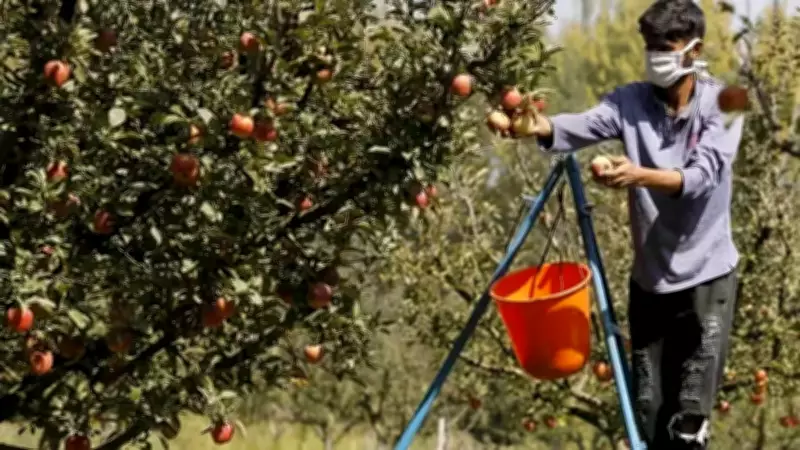
India-US Trade Deal Raises Alarm for Kashmir's Apple Economy
The India-US trade deal has ignited significant concern among fruit growers in the Kashmir Valley, who warn that granting easy market access to American apples could deliver a devastating blow to the region's Rs 10,000 crore apple industry. As Himachal Pradesh's fruit growers announce a shutdown for February 12, their counterparts in Kashmir are contemplating similar protests against agricultural concessions in the bilateral agreement.
"We Simply Can't Compete": Growers Voice Desperation
"This will spell doom for us," states Fayaz Ahmad Malik, president of the Sopore Fruit Mandi, the largest fruit market in the Valley. "We simply can't compete with the US growers. They receive government backing at every stage of cultivation, including substantial subsidies and cash transfers, while we lack even basic access to crop insurance."
Malik emphasizes the broader economic impact, noting, "When we export our apples to Bangladesh, we face over 100% taxes. How can the government consider reducing tariffs for American apples? This move threatens to destroy the local industry and the entire regional economy."

The Backbone of Kashmir's Economy
The apple industry is the mainstay and backbone of Jammu and Kashmir's economy, particularly in the Kashmir Valley, which produces approximately 75% of India's total apple output. Official data indicates an annual production of around 20 lakh metric tonnes, valuing the industry at Rs 10,000 crore and involving roughly 50 lakh people directly or indirectly.
However, the sector is grappling with multiple challenges:
- Climate change adversely affecting yield and quality.
- Proliferation of spurious pesticides compromising crop health.
- A critical lack of crop insurance and government support mechanisms.
Contrasting Government Policies
Muneeb, a fruit grower from Sopore—known as the Valley's fruit bowl—highlights the disparity: "The Modi government promotes 'Make in India' and 'Go local' to bolster Indian businesses. Yet, no such protective policy exists for apples. There is no comparison; US growers receive comprehensive government backing, while we struggle for basic support."
This concern is compounded by recent market disruptions, where imports of Iranian apples have already driven down prices for local produce from Kashmir and Himachal Pradesh, exacerbating financial strain on growers.
Mounting Protests and Political Response
In response to the trade deal's implications, Himachal Pradesh's fruit growers have called for a shutdown and protest on February 12. Malik confirms that Kashmir's growers are considering similar actions, stating, "We are also thinking on the same lines."
Last year, Union Commerce and Industries Minister Piyush Goyal assured Valley growers that their concerns regarding apple imports would be addressed with the Central government. However, with the trade deal advancing, anxiety persists over whether these assurances will translate into protective measures for the domestic industry.
The situation underscores a critical juncture for Kashmir's agricultural sector, as stakeholders await clarity on how the India-US trade agreement will balance international commitments with the survival of a vital local economy.






