Kazakhstan, a major Central Asian energy powerhouse, is embarking on an ambitious and costly journey to squeeze more crude oil from its vast but challenging reserves beneath the Caspian Sea. The nation's strategy hinges on a massive $150 billion investment plan designed to significantly boost output from its crown jewel, the Kashagan field, and other key assets.
The $150 Billion Blueprint for Energy Dominance
The heart of Kazakhstan's strategy is a colossal financial commitment. The country aims to invest this staggering sum to not only maintain but dramatically increase its oil production over the next decade. The primary target is the Kashagan field, one of the world's largest and most complex oil discoveries made in the last half-century.
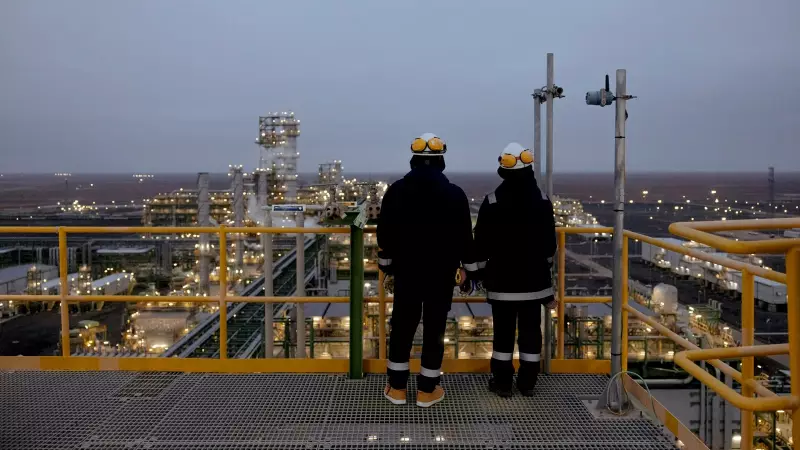
Located in the shallow, icy waters of the northern Caspian Sea, Kashagan is a geological giant but an engineering nightmare. The oil reservoir sits under immense pressure and contains high levels of lethal hydrogen sulfide gas. Extracting it requires artificial islands and a labyrinth of pipelines, with operations frequently halted by harsh winters. Despite these hurdles, the field is central to Kazakhstan's economic ambitions.

Kazakhstan's Energy Minister, Almassadam Satkaliyev, has outlined a clear goal: to raise the nation's overall oil production to 2 million barrels per day (bpd) by the year 2035. This represents a substantial increase from the 1.5 million to 1.6 million bpd range where output has plateaued in recent years. Achieving this target is impossible without unlocking more crude from Kashagan and its sister field, Tengiz.
Kashagan and Tengiz: The Twin Engines of Growth
The plan focuses on two mega-projects. At Kashagan, the consortium of international oil majors, including Shell, TotalEnergies, ExxonMobil, Eni, CNPC, and Inpex, alongside Kazakhstan's KazMunayGas, is evaluating the next phase of development. This could involve new drilling platforms and additional processing facilities to ramp up production.
Simultaneously, at the Tengiz field, a $45.2 billion expansion project is already underway. This project, led by Chevron, is crucial for near-term growth and is expected to increase Tengiz's output by about 260,000 bpd once completed. Together, the enhanced output from Kashagan and Tengiz will form the backbone of Kazakhstan's future oil exports.
The current production figures are already significant. In the first quarter of 2024, Kazakhstan pumped approximately 1.57 million bpd of crude and gas condensate. The country plays a vital role in global energy security, particularly for European markets seeking alternatives to Russian supply. Most Kazakh oil is exported via the Caspian Pipeline Consortium (CPC) route to the Russian Black Sea port of Novorossiysk, and also through the Baku-Tbilisi-Ceyhan pipeline across the South Caucasus.
Navigating Geopolitics and Market Realities
Kazakhstan's ambitious plan is not without its challenges. The massive $150 billion price tag will require deep cooperation and investment from foreign partners. The geopolitical landscape, especially relations with Russia through whose territory key export pipelines run, adds a layer of complexity to long-term planning.
Furthermore, the global shift towards renewable energy and net-zero emissions poses a strategic question for fossil fuel-dependent economies like Kazakhstan. The nation is betting that oil will remain a critical component of the world's energy mix for decades to come, but it also faces pressure to diversify its own economy and invest in greener technologies.
Successfully executing this plan would solidify Kazakhstan's position as a top-tier global oil producer and a key player in Eurasian energy markets. It would bring substantial revenue to state coffers, fund national development programs, and increase Astana's geopolitical leverage. For global consumers and markets, it promises a new, substantial source of non-OPEC oil supply in the coming years.
In conclusion, Kazakhstan is preparing to double down on its vast hydrocarbon resources. The road ahead is expensive and fraught with technical and geopolitical risks, but the potential reward—a secure, prosperous energy future—is a prize the nation is determined to claim.