

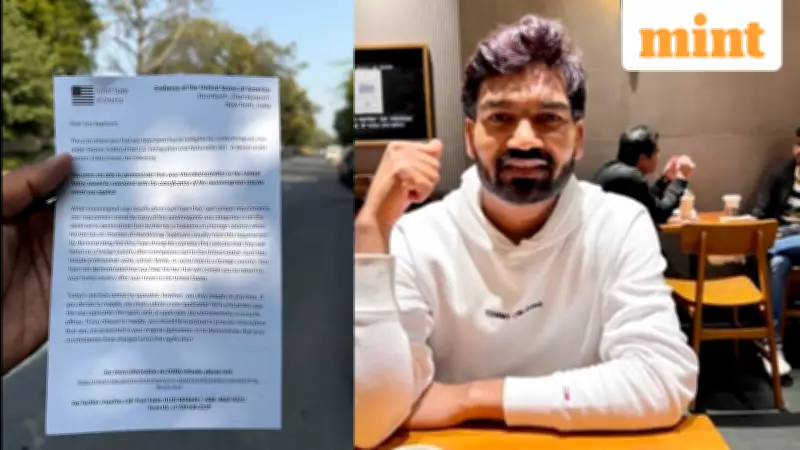
Knot Dating App CEO's US Visa Rejection Ignites Controversy Over Consular Procedures
The co-founder and chief executive officer of the popular Knot Dating application, Jasveer Singh, has publicly voiced his frustration and disappointment after his United States visa application was denied by the New Delhi consulate. The rejection was reportedly based on the consulate's assessment of his "weak ties to India," a decision Singh finds deeply ironic given his extensive professional and personal commitments within the country.
Visa Denied Under Section 214(b) of Immigration Act
Singh's application was formally refused under Section 214(b) of the United States Immigration and Nationality Act. This provision grants visa officers the authority to deny an application if they are not sufficiently convinced that the applicant intends to return to their home country after the proposed visit. In a social media post that included an image of the rejected application, Singh directed a blunt message toward the New Delhi consulate team, questioning the rationale behind their evaluation.
"The irony is palpable," Singh stated. "I have spent the last thirteen years meticulously building my entire career and business foundation right here in India. I run a successful company that employs Indian citizens, I consistently pay taxes to the Indian government, and I have invested everything in this nation. Apparently, these substantial commitments are not considered adequate proof that I will return to India."

Serious Questions Raised About Consular Evaluation Methods
Beyond expressing personal dismay, Singh has raised significant concerns about the transparency and effectiveness of the US consulate's visa evaluation process. He suggested that either the criteria used to assess an applicant's intent are fundamentally flawed or the assessment methodology itself requires a serious overhaul. To amplify his critique, Singh tagged the official X account of Sergio Gor, the United States Ambassador to India, in his post.
His message read: "If this is your established standard, then either your definition of 'intent' is broken or your evaluation process desperately needs a comprehensive review. It is imperative that you provide better training for your New Delhi consulate teams to ensure fair and accurate assessments."
Growing Scrutiny of Applicants' Social Media Activity
In his commentary, Singh also highlighted an emerging trend in the visa application process: the increased scrutiny of applicants' social media footprints. He recounted advice from a friend, noting, "A friend suggested that next time, I should simply delete all my tweets concerning the United States and Non-Resident Indians before the interview, and then my visa would likely be approved." This anecdote points to a perceived link between online expression and visa outcomes.
Immigration Experts Warn Against Last-Minute Digital Clean-Ups
However, immigration legal experts have issued strong warnings against such tactics. They caution that abruptly deleting social media posts or deactivating accounts shortly before a US visa interview can inadvertently raise red flags during the vetting process. As noted in previous reports, US visa application forms explicitly require applicants to disclose all social media handles they have used over the past five years.
An experienced immigration attorney explained, "Sudden and last-minute alterations to one's digital presence can appear evasive or suspicious to visa officers. These actions might be interpreted as an attempt to conceal information, potentially undermining the applicant's credibility rather than aiding their case." This expert advice underscores the complexity of navigating digital scrutiny in modern visa applications.
The case of Jasveer Singh has sparked a broader conversation about the balance between national security protocols and fair treatment for legitimate business travelers and entrepreneurs with deep-rooted ties to their home countries.






