

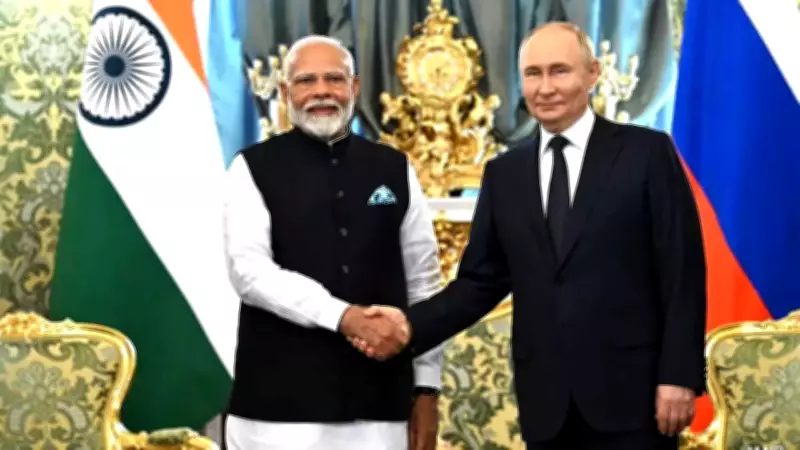
The Kremlin has firmly rejected suggestions that India has agreed to cease purchasing Russian crude oil, asserting that New Delhi's efforts to diversify its energy imports are not a recent development. This statement comes in response to claims made by US President Donald Trump regarding Prime Minister Narendra Modi's commitments.
Russia's Official Response to Trump's Assertions
Kremlin spokesman Dmitry Peskov addressed the matter on Wednesday, emphasizing that India remains free to procure crude oil from any supplier worldwide. "We, along with all other international energy experts, are well aware that Russia is not the only supplier of oil and petroleum products to India. India has always purchased these products from other countries. Therefore, we see nothing new here," Peskov stated during a briefing.
Peskov clarified that Russia has not received any official communication from Indian authorities regarding the cessation of Russian oil imports. He had made similar remarks just a day earlier, reinforcing Moscow's position on the matter.

Mutually Beneficial Energy Partnership
Russian foreign ministry spokesperson Maria Zakharova also defended the ongoing energy trade between the two nations, describing it as advantageous for both parties. "We remain convinced that India's purchase of Russian hydrocarbons is beneficial to both countries and contributes to maintaining stability in the international energy market. We are ready to continue close cooperation in this area with our partners in India," Zakharova affirmed at a press briefing.
Notably, while President Trump spoke of an agreement concerning Russian oil, Prime Minister Modi did not mention any such commitment during recent discussions. This discrepancy was highlighted by private Kommersant FM business radio, adding another layer to the unfolding narrative.
Expert Analysis on Oil Replacement Challenges
Energy expert Igor Yushkov from the National Energy Security Fund provided detailed insights into the practical difficulties India would face in attempting to replace Russian crude with American supplies. "The American shale oil they export is light grades, similar to gas condensate. Russia, on the other hand, supplies relatively heavy, sulfur-rich Urals. This means India will need to blend US crude with other grades, which incurs additional costs, meaning a simple substitution won't be possible," Yushkov explained.
Volume and Market Implications
Yushkov further noted that Russia currently exports between 1.5 million and 2 million barrels per day to India, a volume that the United States would struggle to match. "America won't be able to cover that volume. So, one gets the sense that Trump is simply trying to show that he won these trade negotiations and the deal was concluded entirely in line with US demands," he remarked.
Recalling historical market shifts, Yushkov pointed out that Russia's pivot to the Indian market in 2022, following the loss of access to European and American buyers, resulted in a production cut of 1 million barrels per day. This move pushed global oil prices to $120 per barrel and drove US gasoline and diesel prices to record highs, illustrating the interconnected nature of global energy markets.
Background on India's Oil Import Dynamics
India imports approximately 88 percent of its crude oil requirements. Prior to 2021, Russian oil constituted just 0.2 percent of India's crude imports. However, after Western nations distanced themselves from Moscow following its invasion of Ukraine in February 2022, India emerged as the largest buyer of discounted Russian crude.
Recent data from real-time analytics firm Kpler indicates a shift in these patterns. India's imports of Russian crude declined to about 1.1 million barrels per day in the first three weeks of January. This represents a decrease from an average of 1.21 million barrels per day in the previous month and a significant drop from over 2 million barrels per day in mid-2025.
Trade Policy Context
The discussion occurs against the backdrop of existing trade tensions. Last year, President Trump imposed tariffs of up to 50 percent on Indian goods, among the highest globally. This included a 25 percent levy specifically linked to India's purchases of Russian energy, highlighting the complex interplay between energy policy and international trade relations.

The Kremlin's statements and expert analyses collectively underscore the multifaceted challenges and strategic considerations involved in global energy procurement, particularly for major importers like India navigating geopolitical pressures and market realities.





