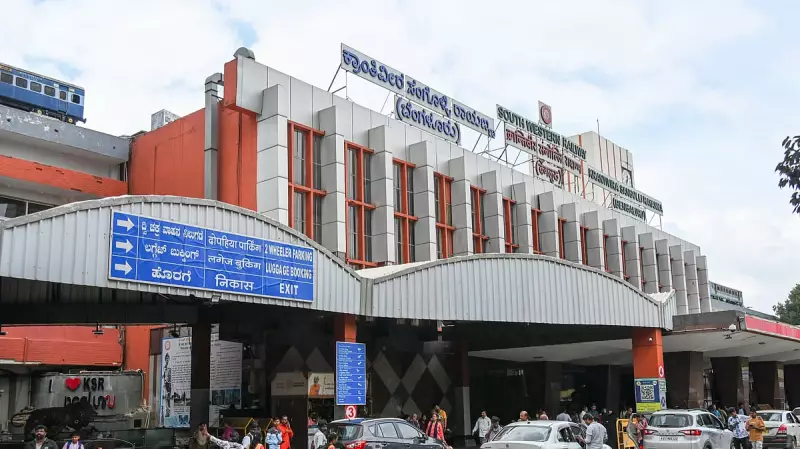
One of Bengaluru's most critical transportation hubs, the KSR Bengaluru Railway Station, finds itself navigating the complex challenge of managing enormous passenger volumes while addressing growing safety concerns. Designated as an 'A1' category station, this pivotal node in India's railway network is a beehive of constant activity.
The Operational Heartbeat of Bengaluru
The station serves as a major gateway to and from the city, handling an impressive roster of nearly 200 trains daily. This extensive schedule includes a diverse mix of express and superfast train services, alongside regular passenger trains that connect Bengaluru to countless destinations across the country. The sheer volume of services underscores the station's critical role in regional and national mobility.
As a primary transit point for thousands of commuters and long-distance travelers every day, the infrastructure and management of KSR Bengaluru Station are perpetually under the microscope. The high footfall is a testament to its importance but also presents a significant logistical puzzle for railway authorities.

Balancing Scale with Security
The core challenge lies in harmonizing operational efficiency with passenger safety. With such a dense schedule and constant human traffic, ensuring a secure and comfortable environment requires meticulous planning and resource allocation. The station's A1 status implies it is among the top-tier stations in the Indian Railways network, yet this classification brings with it heightened expectations for service quality and safety protocols.
Observers and daily commuters alike note the constant juggling act performed by station staff and railway police. The focus remains on managing crowd flow during peak hours, ensuring platform safety, and maintaining cleanliness and order amidst the relentless flow of humanity. These concerns are particularly acute during festive seasons and holidays when passenger numbers surge dramatically.
The Path Forward for a Key Transport Hub
The situation at KSR Bengaluru Station highlights a broader narrative of urban infrastructure straining under the weight of rapid city growth. The station is not just a transit point but a microcosm of Bengaluru's evolving identity as a megacity. The ongoing dialogue between railway officials and the public centers on potential upgrades, better crowd management techniques, and enhanced safety measures.
As reported on 26 November 2025, the station continues its crucial service. The narrative of KSR Bengaluru is one of relentless motion, a place where the ambitions of a city on the move meet the practical realities of running a massive public utility. Its ability to evolve and address these dual pressures of volume and safety will be crucial for Bengaluru's future connectivity.