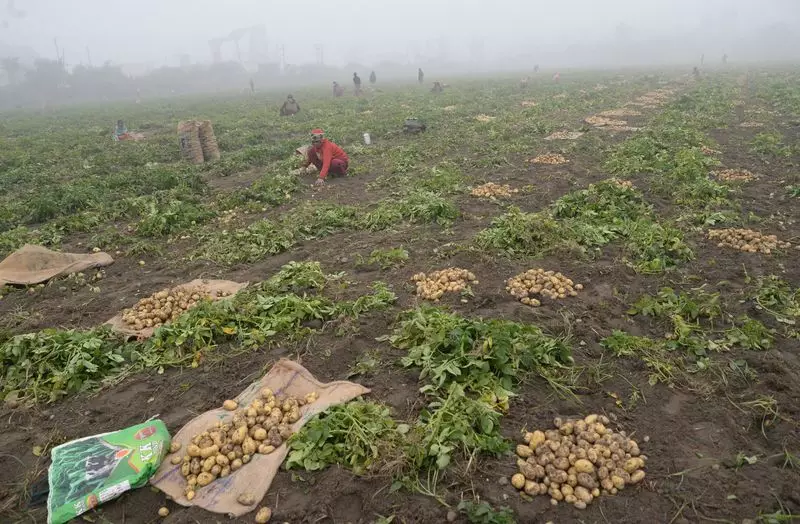
Farmers across Punjab cultivating potatoes have been put on high alert. The Krishi Vigyan Kendra (KVK) in Ropar has issued a crucial advisory warning of a significantly increased risk of a late blight disease outbreak in the region's potato crops.
Imminent Threat to Potato Yield
The warning comes in response to the current weather conditions prevailing in the state. KVK Ropar experts have identified that the combination of low temperatures, high humidity, and frequent fog has created a perfect environment for the rapid spread of the destructive pathogen. The disease, caused by the fungus-like organism Phytophthora infestans, is one of the most devastating for potato plants and can lead to massive crop losses if not managed promptly.
Dr. Manmohanjit Singh, the Senior Scientist and Head of KVK Ropar, emphasized the urgency of the situation. He stated that the prevailing climatic factors are highly conducive for the disease to flare up and spread across fields. Farmers are being urged to scout their fields daily to detect the earliest signs of infection.

Identifying Symptoms and Recommended Action
Early detection is critical for effective control. Farmers should look for specific symptoms on potato leaves and stems. The initial signs often appear as small, pale green or water-soaked spots on the leaf edges and tips. These spots quickly enlarge and turn dark brown to black. A key identifying feature is the presence of a white, fuzzy growth on the underside of the leaves during humid conditions, especially in the early morning.
Upon noticing these symptoms, KVK Ropar recommends immediate intervention with fungicides. The advisory specifically suggests the application of effective compounds to curb the disease's progress. Farmers are advised to use fungicides containing cymoxanil + mancozeb or fenamidone + mancozeb. For those practicing organic farming, sprays based on copper oxychloride are recommended as a preventive and management measure.
The application must be thorough, ensuring complete coverage of the plant foliage. Experts stress that timely application at the first sign of disease can prevent severe damage and protect the yield potential of the crop.
Proactive Measures and Long-Term Management
Beyond reactive spraying, KVK Ropar's advisory includes several proactive steps for farmers. Maintaining proper drainage in fields to avoid waterlogging is essential, as moisture promotes the disease. Farmers should also avoid excessive irrigation during this risky period. Using disease-free seed potatoes for planting is a fundamental long-term strategy to reduce the initial source of infection.
Crop rotation is another vital practice advised by agricultural scientists. Avoiding planting potatoes or other susceptible crops like tomatoes in the same field consecutively helps break the disease cycle. Removing and destroying any infected plant debris from the field after harvest prevents the pathogen from surviving in the soil to infect the next season's crop.
The alert from KVK Ropar is a critical piece of extension service aimed at safeguarding the livelihoods of Punjab's potato farmers. The state is a major producer of potatoes in India, and an uncontrolled outbreak of late blight could have serious economic consequences for the agricultural community. By heeding this warning, monitoring their fields closely, and taking swift, informed action, farmers can effectively manage the risk and secure their harvest.