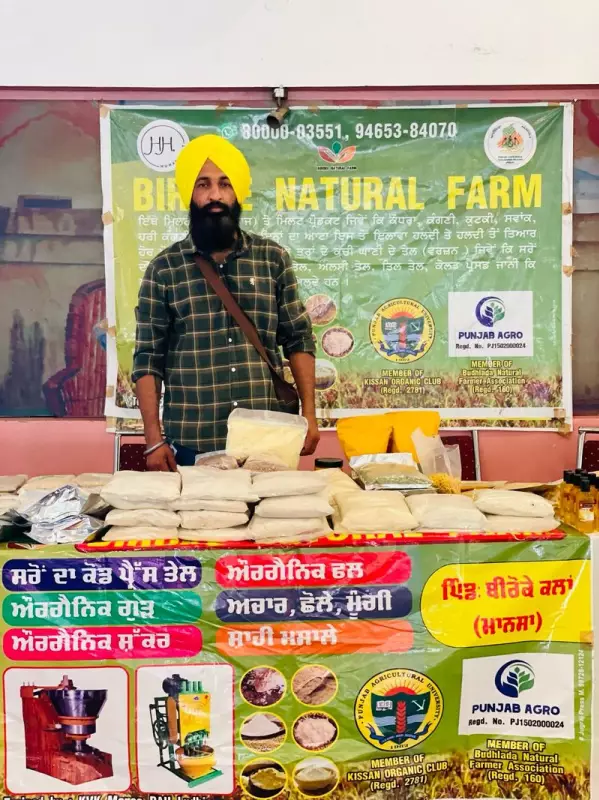
In the heart of Punjab's agricultural landscape, a progressive farmer from Mansa has demonstrated that crop stubble, often seen as a problem, can actually become a pathway to prosperity and environmental sustainability. Gurpreet Singh, operating from Burj Hakima village, has successfully transformed what many consider waste into wealth while simultaneously enhancing his farm's productivity.
From Burning to Earning: The Stubble Transformation Journey
Gurpreet Singh has completely revolutionized his approach to crop residue management on his 13-acre farm. Instead of following the conventional practice of burning stubble, which has caused severe environmental issues across North India, he has adopted an innovative composting technique. Each year, Singh has witnessed consistent improvement in his soil health, directly attributing this positive change to his sustainable stubble management practices.
The farmer's method involves converting paddy straw into nutrient-rich compost that serves as excellent organic manure. This approach not only addresses the stubble burning problem but also creates valuable resources for his farming operations. Singh proudly states that his soil quality has been improving annually since he implemented this eco-friendly technique.

The Practical Process and Measurable Benefits
Singh's composting method begins immediately after harvesting his paddy crop. He collects the straw and initiates the decomposition process using natural agents. The resulting compost becomes ready for application within a specific timeframe, perfectly aligning with the next cropping season's requirements.
The financial benefits have been substantial and measurable. Singh highlights that by using his own produced compost, he has significantly reduced his dependence on chemical fertilizers. This reduction translates to direct cost savings while simultaneously building long-term soil fertility. The organic matter from the compost improves soil structure, water retention capacity, and promotes beneficial microbial activity.
Another crucial advantage Singh emphasizes is the moisture conservation aspect. The compost-enriched soil retains water more efficiently, reducing irrigation requirements—a critical benefit in regions facing water scarcity issues. This moisture conservation becomes particularly valuable during peak summer months when water resources are stretched thin.
Broader Implications for Punjab's Farming Community
Gurpreet Singh's success story offers a viable alternative to the widespread practice of stubble burning that has plagued Punjab and neighboring states. His approach demonstrates that environmental responsibility and economic profitability can coexist in agricultural practices.
The timing of this innovation couldn't be more relevant, as Punjab grapples with annual episodes of severe air pollution caused by crop residue burning. Singh's method presents a practical solution that other farmers can adopt without significant investment in machinery or technology. It relies on traditional composting knowledge enhanced with modern understanding of soil science.
Local agricultural experts have taken note of Singh's achievements. They recognize that such individual initiatives could collectively make a substantial impact on regional environmental challenges while improving farm economics. The success in Burj Hakima village serves as an inspiring case study for extension workers and policymakers promoting sustainable agriculture.
As more farmers seek alternatives to stubble burning, stories like Gurpreet Singh's provide both inspiration and practical guidance. His journey from seeing stubble as a problem to recognizing it as a resource represents the kind of mindset shift needed to transform Indian agriculture into a more sustainable and profitable enterprise.