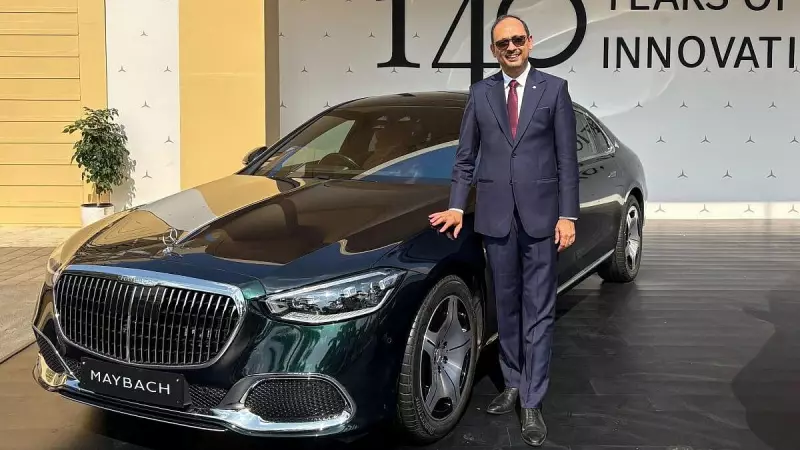
Mercedes-Benz India Chief: No Price Reductions Expected, India-EU FTA to Accelerate Auto Tech Innovation
In a significant statement regarding the automotive industry's future in India, Santosh Iyer, the head of Mercedes-Benz India, has clarified that consumers should not anticipate price reductions from the luxury car manufacturer. Instead, Iyer emphasized that the recently concluded India-European Union Free Trade Agreement (FTA) represents a historic achievement that will primarily drive technological innovation within the automotive sector.
Historic Trade Pact and Its Implications
Terming the Indo-EU FTA as a landmark development for India, Iyer articulated that this comprehensive trade pact powerfully reiterates the rising relevance of the Indian economy on the global stage. The agreement, finalized in early 2026, is poised to reshape trade dynamics and foster deeper economic collaboration between India and the European Union.
Iyer's comments underscore a strategic shift in focus from price competition to innovation-led growth. He explained that the FTA will facilitate smoother access to advanced technologies, components, and collaborative research opportunities, enabling automakers to integrate cutting-edge features and sustainable solutions into their vehicles more efficiently.

Focus on Technological Advancement Over Price Cuts
Addressing market expectations, the Mercedes-Benz India chief explicitly stated that the company does not plan to implement price reductions for its vehicles. This position highlights a commitment to maintaining premium value and investing in advanced automotive technologies rather than competing on price points.
The India-EU FTA is expected to benefit the automotive sector through:
- Enhanced technology transfer from European automotive giants to Indian manufacturing hubs.
- Increased collaboration on research and development for electric vehicles, autonomous driving, and connected car technologies.
- Streamlined import processes for high-tech components and materials, reducing costs and time for innovation cycles.
- Strengthened supply chains that support the integration of sophisticated automotive systems.
Broader Economic Significance
Iyer's remarks reflect a broader industry perspective that views the India-EU FTA as a catalyst for elevating India's automotive sector to global standards. By prioritizing technological innovation, the pact aims to position India as a key player in the future of mobility, including electric and smart vehicle ecosystems.
This development aligns with India's ambitions to become a manufacturing and innovation hub under initiatives like Make in India and the National Electric Mobility Mission Plan. The FTA is anticipated to attract further investments, boost exports, and create high-skilled employment opportunities in the automotive and allied industries.
As the automotive landscape evolves, Mercedes-Benz India's stance underscores a strategic emphasis on quality, innovation, and sustainable growth, leveraging the India-EU FTA to drive progress rather than engaging in price wars.