

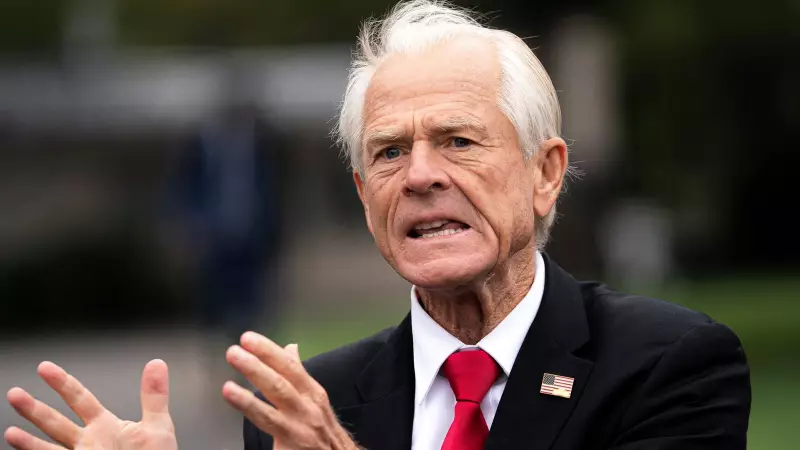
White House trade advisor Peter Navarro has raised pointed questions about American spending on artificial intelligence services. He specifically questioned why United States citizens should pay for AI services that ultimately serve clients in countries like India and China.
Navarro's Claims on AI and Inflation
During a recent interview on the "Real America's Voice" show with former White House strategist Steve Bannon, Navarro outlined his concerns. He argued that AI systems, such as ChatGPT, operate on American soil using US electricity and resources. Yet these services cater extensively to large user bases in India, China, and other nations worldwide.
"Why are Americans paying for AI in India?" Navarro asked during the conversation. He emphasized that this situation presents a significant issue requiring attention. Navarro also linked it to broader resource concerns, mentioning water usage and farmland impacts.

Foreign Investment and Inflation Risks
Navarro expanded his critique to include foreign entities purchasing American land. He stated these buyers often pay up to ten times the market rate for farmland. This practice, he warned, could exacerbate domestic food price inflation in the United States.
"They are coming in and paying 10x on farmland," Navarro said. "If we are going to fight food inflation, then we need to wrap our heads around that."
Recent data from the US Bureau of Labor Statistics shows the consumer price index inflation held at 2.7% for the twelve months ending December 2025. This figure remained consistent from November 2025. Earlier reports indicated inflation was at 3% for the period ending September 2025.
Context of US-India Trade Tensions
Navarro's comments arrive amidst ongoing trade friction between the United States and India. The US currently imposes 50% tariffs on all Indian imports. Negotiations for a potential bilateral trade agreement have faced repeated delays.
In September 2025, Navarro labeled India the "Maharajah of tariffs." He criticized India for maintaining what he called the highest tariffs of any major country against the United States.
"It's absolutely true," Navarro asserted. "They have the highest tariffs in any major country in the world against the United States. We have to deal with that."
He suggested India must eventually align with US trade expectations. Navarro issued a stark warning, implying consequences if India does not comply. "I think India must come around at some point," he stated. "And if it doesn't, it's laying down with Russia and China, and that won't end well for India."
The advisor's remarks highlight growing economic nationalism and protectionist sentiments within certain US political circles. They reflect ongoing debates about globalization, technology exports, and fair trade practices.






