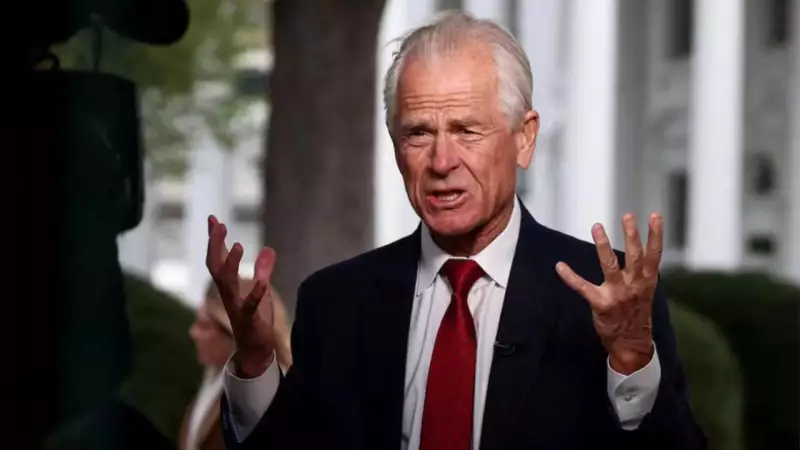
Peter Navarro, the former trade adviser to US President Donald Trump, has once again directed criticism towards India. This time, he raises questions about American users funding artificial intelligence services that benefit Indian consumers.
Navarro's AI Trade Concern
Speaking in an interview with Steve Bannon on "Real America Voice," Navarro highlighted what he sees as a trade imbalance. He pointed out that AI platforms such as OpenAI's ChatGPT are developed and powered within the United States. These platforms then provide services to users in countries like India and China.
"Why are Americans paying for AI in India?" Navarro asked during the discussion. He emphasized that ChatGPT operates on American soil, using US electricity, while servicing large user bases abroad. Navarro described this situation as another trade-related issue that requires attention.

Broader Trade Tensions
Navarro's comments come against the backdrop of ongoing trade disputes between Washington and New Delhi. The United States has imposed 50 percent tariffs on certain Indian imports. President Trump cited India's continued purchases of Russian oil as justification for these measures.
Multiple rounds of negotiations have taken place regarding a bilateral trade deal. However, significant differences remain between the two nations on various economic issues.
Previous Criticisms of India
This is not Navarro's first criticism of Indian policies. He has repeatedly accused New Delhi of importing Russian crude oil. Navarro claims these purchases help finance Russia's military actions in Ukraine.
The former White House official has frequently referred to India as the "Maharaja of tariffs." He used this phrase again while defending the steep tariffs imposed on Indian goods. Navarro stated these tariffs were rooted in national security concerns rather than simple trade reciprocity.
"This was a pure national security issue associated with India's abject refusal to stop buying Russian oil," Navarro explained.
Controversial Remarks and Indian Response
Navarro has also made controversial statements about Indian society. He previously claimed that "Brahmins" were profiting at the expense of the general Indian public. These remarks drew sharp responses from Indian officials.
India's Ministry of External Affairs rejected Navarro's allegations. Spokesperson Randhir Jaiswal stated last year, "We have seen some inaccurate statements made by him. We reject them."
The Indian government has consistently maintained that its energy purchases follow market conditions and strategic considerations. Officials emphasize that India's decisions are made in the national interest.
Additional Concerns Raised
During his recent interview, Navarro also expressed worries about foreign ownership of US farmland. He alleged that overseas groups were paying up to ten times the actual value for agricultural land. Navarro warned this practice could potentially drive up domestic food prices in the United States.
These comments reflect broader concerns within certain American political circles about foreign economic influence. Navarro's remarks come as trade relationships between major economies continue to evolve in the post-pandemic world.
The intersection of technology trade and traditional goods trade represents a new frontier in international economic discussions. As AI services become increasingly global, questions about their economic implications are likely to persist.