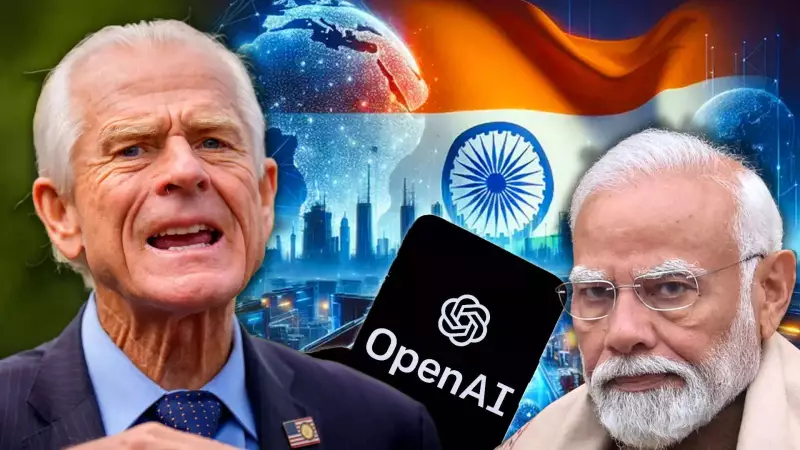
Trump Adviser Navarro Questions US Power Costs for India's AI Services
Peter Navarro, a senior adviser to former President Donald Trump, has raised pointed questions about the use of American electricity to power artificial intelligence services that serve large numbers of users in India. Navarro made these comments during an appearance on the 'Real America Voice' program, where he highlighted what he sees as an imbalance in global AI infrastructure.
Focus on Electricity and AI Platforms
Navarro specifically mentioned platforms like ChatGPT, noting that US-based data centers are increasingly supporting global AI demand. He argued that countries such as India and China benefit significantly from this setup, while American resources bear the cost. This issue, according to Navarro, could lead to policy actions from the Trump administration if it returns to power.
The core of Navarro's argument centers on the economics of electricity. He suggested that the United States is effectively subsidizing AI services for international users through its power grid. This comes at a time when energy costs and infrastructure are becoming critical topics in US domestic policy.

Navarro's History with India
Peter Navarro is no stranger to taking a tough stance on trade issues involving India. As a key architect of Trump's trade strategy during his previous term, Navarro has consistently advocated for steep tariffs against Indian goods. He has repeatedly accused New Delhi of maintaining high trade barriers that disadvantage American businesses.
This latest commentary fits into a broader pattern of Navarro's views on international trade. His approach often emphasizes protecting US economic interests above global cooperation. The focus on AI and electricity represents a new front in these ongoing trade tensions.
Implications for US-India Relations
The remarks come amid already strained trade relations between the two countries. The Trump administration previously imposed sweeping tariffs on various imports, and Navarro's comments suggest that technology sectors might face increased scrutiny. Artificial intelligence, being a rapidly growing field, could become a focal point in future trade discussions.
Industry observers note that data centers require substantial electricity to operate, and the United States hosts many of the world's largest facilities. As AI services expand globally, questions about resource allocation and cost distribution are likely to become more prominent in political discourse.
Navarro did not specify what exact policy actions he envisions, but his language indicates that the Trump team is considering measures to address what they perceive as unfair advantages. This could potentially affect how US-based tech companies provide services to international markets, particularly in countries with high user bases like India.
The development underscores how technology infrastructure is increasingly intertwined with geopolitical and economic considerations. As AI becomes more integral to daily life and business operations worldwide, debates about who pays for and benefits from these systems are expected to intensify.