

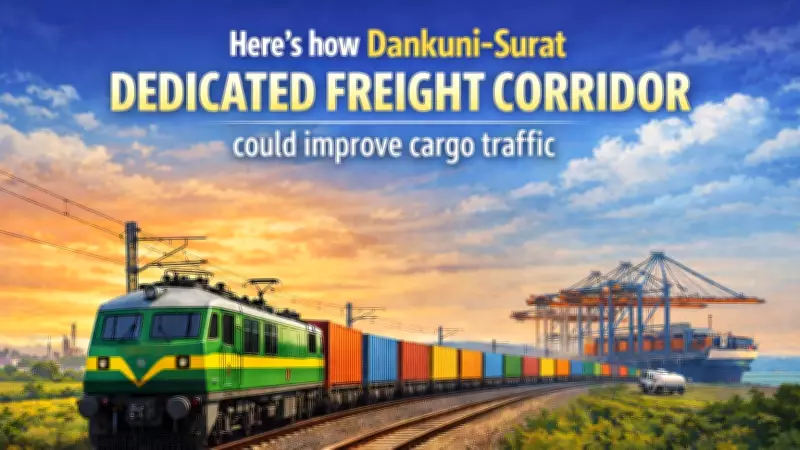
Dankuni-Surat Dedicated Freight Corridor: A Game-Changer for Indian Logistics
The Union Budget 2026 has unveiled a transformative infrastructure project that promises to revolutionize freight movement across India. Finance Minister Nirmala Sitharaman has proposed the establishment of a new Dedicated Freight Corridor (DFC) connecting Dankuni in West Bengal with Surat in Gujarat. This ambitious 2,052-kilometer corridor represents a significant leap forward in India's transportation infrastructure, designed specifically to address growing cargo demands and enhance logistical efficiency.
Strategic Connectivity Across Six States
Railway Minister Ashwini Vaishnaw, while addressing the press at Rail Bhawan, emphasized the corridor's extensive reach. The Dankuni-Surat DFC will traverse through six crucial states: West Bengal, Odisha, Chhattisgarh, Madhya Pradesh, Maharashtra, and Gujarat. This strategic alignment creates a vital east-west freight artery that will seamlessly integrate with existing dedicated freight networks.
The corridor's terminal points hold particular significance. Starting from Dankuni in West Bengal and terminating at Surat in Gujarat, this infrastructure will create direct linkages with both the Western Dedicated Freight Corridor (WDFC) and the Eastern Dedicated Freight Corridor (EDFC). This integration enables industries to efficiently transport goods from major ports along India's western coastline, including those in Maharashtra and Gujarat.

Operational Advantages and Economic Impact
Dedicated Freight Corridors operate with specialized infrastructure that offers multiple advantages over conventional rail networks:
- Separate tracks exclusively for cargo traffic, eliminating conflicts with passenger trains
- Capability to handle higher axle load wagons for increased cargo capacity
- Support for double-stack container operations, maximizing container transport efficiency
- Significant reduction in rail transportation costs through optimized operations
The railways have highlighted that these features will not only improve the quality of rail freight services but also substantially reduce transportation costs. The project is being executed by the Dedicated Freight Corridor Corporation of India Limited (DFCCIL) under the Ministry of Railways, ensuring specialized implementation of this critical infrastructure.
Transforming Regional Trade and Logistics
Minister Vaishnaw elaborated on the corridor's broader economic implications. This new east-west freight corridor will strengthen seamless trade flows across regions while addressing several persistent challenges in India's transportation network:
- Decongestion of existing rail networks by diverting freight traffic to dedicated lines
- Enhanced efficiency in goods transportation through optimized routing and scheduling
- Support for industrial growth by providing reliable, cost-effective freight solutions
- Strengthening of supply chains across multiple economic sectors
The corridor's connection to western ports is particularly significant for export-import activities. Industries relying on ports in Maharashtra and Gujarat will benefit from improved connectivity to eastern and central regions, creating a more balanced and efficient national logistics framework.
Context Within India's Freight Corridor Network
Currently, India operates two major dedicated freight corridors. The Eastern Dedicated Freight Corridor (EDFC) extends from Sahnewal near Ludhiana in Punjab through multiple states to terminate at Dankuni in West Bengal. Meanwhile, the Western Dedicated Freight Corridor (WDFC) connects Dadri in Uttar Pradesh to Jawaharlal Nehru Port in Mumbai, passing through several western states.
The Dankuni-Surat DFC represents a strategic addition to this network, creating crucial east-west connectivity that complements the existing north-south corridors. This expansion reflects India's commitment to developing a comprehensive freight transportation system that can support the nation's growing economic ambitions and industrial requirements.

As India continues to invest in transportation infrastructure, the Dankuni-Surat Dedicated Freight Corridor stands out as a pivotal project that promises to transform cargo movement, enhance logistical efficiency, and contribute significantly to regional economic development across six states.





