

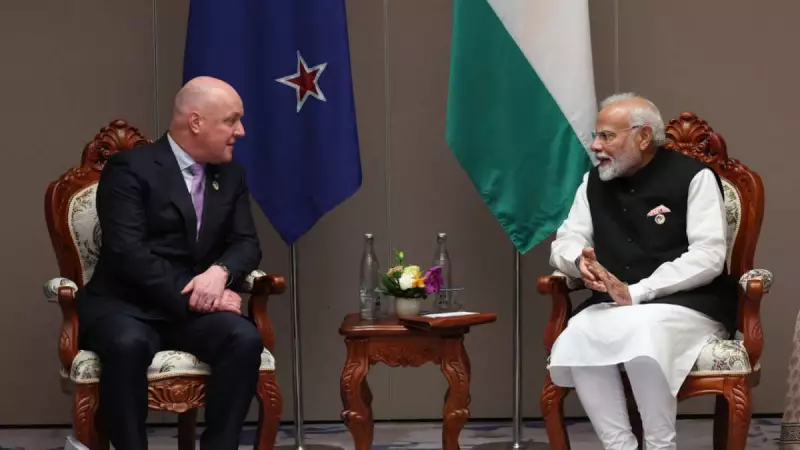
In a strong defence of a landmark trade deal, New Zealand Prime Minister Christopher Luxon has publicly championed the recently signed Free Trade Agreement (FTA) with India, highlighting its potential to create more jobs and boost incomes for New Zealanders. This endorsement comes despite notable internal opposition from his own Foreign Minister, Winston Peters.
Luxon's Optimistic Vision for the India Trade Deal
Prime Minister Christopher Luxon, speaking on the benefits of the pact, outlined a clear economic upside for his country. He emphasized that the agreement, which was formally signed on December 27, 2024, is designed to open significant opportunities for New Zealand's key export sectors. Luxon pointed specifically to industries like logistics, horticulture, and processed foods as major beneficiaries.
The core of Luxon's argument rests on tangible gains for the New Zealand workforce and economy. "This FTA with India is about creating more jobs and higher incomes for New Zealanders," the Prime Minister stated, framing the deal as a direct contributor to national prosperity. His comments are seen as an effort to solidify public and political support for the agreement, which marks a strategic shift in New Zealand's trade diplomacy towards one of the world's fastest-growing major economies.

Internal Dissent: Foreign Minister's Objections
However, the Prime Minister's unified front is challenged by dissent within his coalition government. Foreign Minister Winston Peters, a veteran politician and leader of the New Zealand First party, has raised significant objections to the FTA's terms. Peters' concerns are reported to centre on the agreement's provisions regarding the mobility of Indian professionals and students entering New Zealand.
This internal disagreement highlights a classic tension in trade negotiations: balancing economic access with domestic political and social considerations. While Luxon focuses on the macroeconomic benefits of increased trade and investment, Peters appears to be weighing the potential socio-economic impacts at home. The public airing of this disagreement underscores the complex political dynamics within New Zealand's coalition government and suggests that the path to full ratification and implementation may not be entirely smooth.
The Road Ahead for the India-New Zealand Partnership
The signing of this FTA represents a pivotal moment in bilateral relations. For India, it is another step in its strategy of deepening economic ties with key partners under its trade policy framework. For New Zealand, it represents a crucial diversification of trade relationships and a foothold in a massive consumer market. The deal is expected to:
- Gradually eliminate or reduce tariffs on a wide range of goods.
- Improve market access for services and investments.
- Establish frameworks for cooperation on standards and sanitary measures.
Despite the internal political friction, the Luxon government appears determined to move forward. The Prime Minister's public praise for the deal is a clear signal of its priority status. The coming months will be critical as the government works to address internal concerns, possibly through side letters or clarifications on sensitive issues like visa regulations, while also navigating the domestic legislative process required to bring the agreement into force.
The ultimate success of the India-New Zealand FTA will be measured by its ability to deliver on Prime Minister Luxon's promises of job creation and income growth, all while managing the domestic apprehensions voiced by figures like Foreign Minister Peters. The world will be watching this partnership as a case study in how democracies reconcile global economic ambition with internal political realities.






