

Odisha Betel Leaf Farmers Face Severe Setback as Gulf Exports Grind to a Halt
Betel leaf farmers in the coastal regions of Jagatsinghpur and neighboring districts in Odisha are grappling with a significant economic blow after exports to West Asian markets came to an abrupt stop. This disruption is directly linked to the ongoing US-Iran war, which has suspended trade routes and logistics to the region.
Major Export Markets and Price Collapse
Nations such as Iran, Iraq, the UAE, Saudi Arabia, Bahrain, and Kuwait have traditionally been key buyers of Indian betel leaves, commonly known as paan. Exporters based in Mumbai typically source large quantities from Odisha before shipping them to these destinations. However, with exports suspended since last week, local market prices have seen a sharp decline.
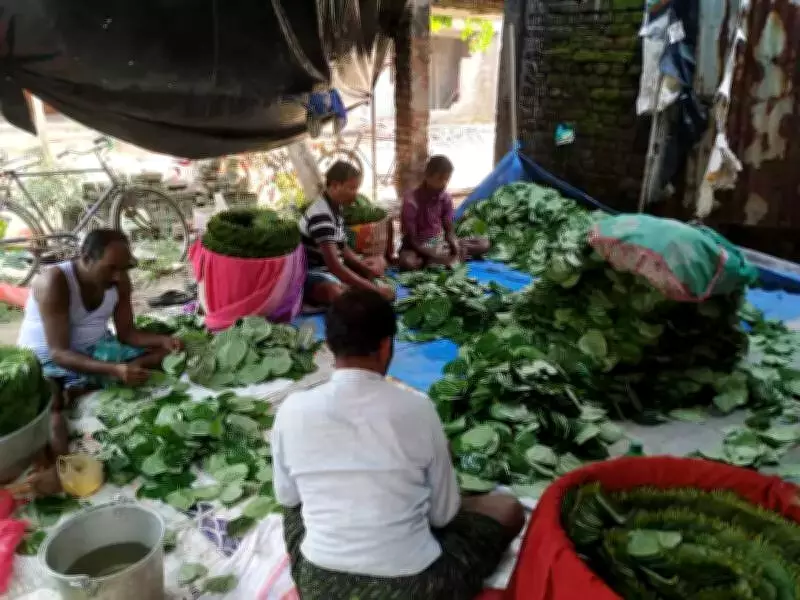
Lokanath Malla, a paan farmer from Nuagaon, highlighted the drastic price drop. In local markets, 1,000 betel leaves are now selling for Rs 1,600 to Rs 1,800, a stark contrast to the Rs 5,000 to Rs 6,000 they fetch in international markets. Annually, Odisha farmers supply paan worth nearly Rs 1,200 crore to Mumbai, underscoring the scale of this industry.

Logistical Disruptions and Reduced Shipments
The impact extends to logistics, as detailed by Naresh Das, a railway booking agent in Bhubaneswar. Previously, around 500 baskets of betel leaves were sent daily to Mumbai by train, operating for 24 days each month. Each basket contains approximately 2,000 leaves. Since the US-Iran war escalated, Mumbai exporters have halted purchases, reducing daily shipments to only about 300 baskets.
This reduction affects nearly 1,200 farmers across villages like Dhinkia, Gobindapur, Kujang Patana, and Trilochanpur, who heavily rely on the Gulf market for their livelihoods. Nabaghan Swain, a supplier from Gadakujang, confirmed that Mumbai exporters have instructed them to stop sending paan until the conflict resolves.
Unique Qualities and Domestic Diversion
Odisha paan is highly prized in the Gulf for its extra-large size, pungent flavor, and thick stalk. Prasant Samal, a farmer from Dhinkia, explained that the sandy soil in areas like Kujang, Astarang, Baliapana, Bhogarai, and Puri is ideal for cultivation, giving these regions a strong presence in international markets.
Haldhar Swain, a 56-year-old supplier from Kujang, expressed concern over the careful packing required to prevent rotting during transit. With exports suspended, farmers are distressed that their leaves will not reach West Asia. Mumbai-based exporter Jogesh Chaurasia attributed the halt to suspended direct flights and shipping services due to the war. He noted that they are now redirecting the Odisha paan supply to domestic markets, where demand remains robust.
The situation highlights the vulnerability of agricultural exports to geopolitical tensions, leaving many farmers in Odisha uncertain about their future income and market stability.






