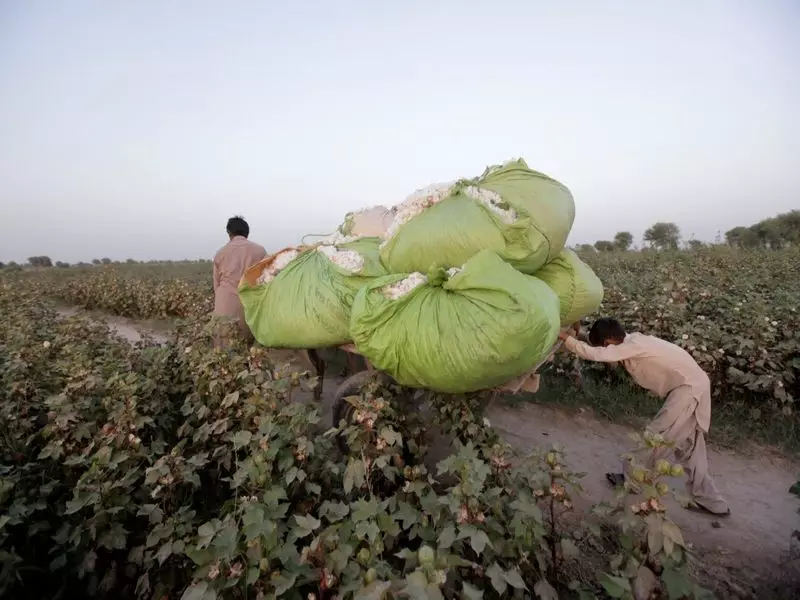
A severe case of policy paralysis in Islamabad is choking Pakistan's vital cotton trade, putting its multi-billion dollar export economy in serious jeopardy. The government's prolonged indecision on approving genetically modified (GM) cotton varieties has created a massive supply crisis, forcing textile mills to rely on expensive imports and threatening the livelihoods of millions.
The Root of the Crisis: A Regulatory Vacuum
The core issue lies with the Technical Advisory Committee (TAC) under Pakistan's Ministry of National Food Security and Research. This committee, responsible for evaluating and approving new GM cotton seeds, has been effectively dormant. It has not convened for over two years, creating a critical regulatory vacuum. Consequently, no new GM cotton varieties have been approved since 2020, while older varieties have succumbed to pests and climate vulnerabilities.
This stagnation has led to a catastrophic drop in domestic cotton production. Pakistan, once a major producer, now faces a staggering shortfall. The country's textile industry, which contributes over 60% to the nation's total exports, requires approximately 16 million bales of cotton annually. However, domestic production for the current season is projected to be a mere 8.3 million bales, less than half of the industry's needs.

Financial Strain and Global Market Disadvantages
To bridge this enormous gap, Pakistani textile mills are compelled to import raw cotton at significantly higher costs. Industry experts estimate that imports for the current year could reach 4.5 million bales, costing the economy a colossal $1.5 billion in precious foreign exchange. This import dependency makes Pakistani textiles less competitive globally compared to regional rivals like India and Bangladesh, which have more stable and productive domestic cotton supplies.
The situation is further exacerbated by international market dynamics. Pakistani importers are forced to buy cotton from the United States, Brazil, and East Africa at premium prices, including high freight and insurance costs. The chairman of the Pakistan Cotton Ginners Forum highlighted that the price differential is crushing, with imported cotton being far more expensive than what could be produced locally with the right seeds.
Widespread Consequences and Calls for Action
The ripple effects of this policy failure are widespread. From ginners and farmers to spinners and weavers, the entire textile value chain is under immense stress. The industry warns of massive job losses and factory closures if the issue is not resolved urgently. Stakeholders are pleading with the government to reconvene the TAC immediately and approve new, climate-resilient, and high-yielding GM cotton seeds for the upcoming planting season.
Despite clear warnings and detailed presentations from industry bodies to the federal commerce minister, concrete action remains elusive. The delay is attributed to bureaucratic hesitancy and a lack of political will to make a decisive call on a scientifically backed solution. This inaction directly threatens Pakistan's economic stability, as the textile sector is the largest industrial employer and export earner.
In conclusion, Pakistan's cotton crisis is a stark example of how regulatory indecision can cripple a core economic sector. The government's failure to approve modern agricultural technology is forcing the nation to spend billions on imports, undermining export competitiveness, and risking the jobs of millions. The window to act for the next planting season is closing fast, and the cost of continued paralysis will be measured in economic decline and lost global market share.