

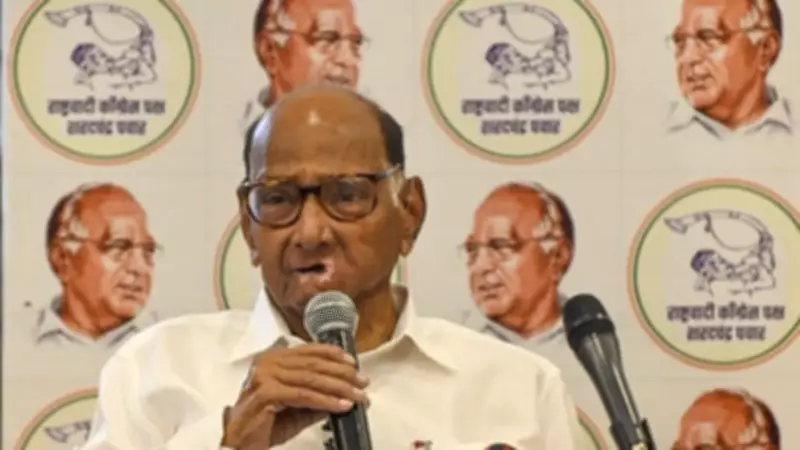
Nationalist Congress Party (NCP) leader Sharad Pawar has raised significant concerns regarding the newly implemented United States tariff policy, which appears to favor agricultural exports while posing potential challenges for Indian farmers. Speaking to reporters in Baramati, Pawar emphasized that the implications of this policy shift could have far-reaching effects on India's agricultural sector.
US Tariff Policy: A Double-Edged Sword for Indian Agriculture
The recent adjustments in the US tariff structure have created a scenario where American agricultural exports might gain a competitive edge in global markets. However, this development has sparked apprehension among Indian agricultural stakeholders, who fear that their export competitiveness could be undermined. Pawar highlighted that this policy could disproportionately impact small and marginal farmers in India, who are already grappling with various economic pressures.
Clarity on India-US Trade Deal Expected Soon
Sharad Pawar indicated that a clearer understanding of the recent India-US trade agreement would emerge within the next two days. This anticipated clarity is crucial for assessing how the bilateral trade dynamics will evolve and what specific measures might be implemented to address the concerns raised by the new US tariff policy.

Potential Implications for Indian Farmers
The NCP leader's remarks underscore several potential challenges:
- Export Competitiveness: Indian agricultural products might face stiffer competition in international markets due to favorable US tariff conditions.
- Market Access: There could be implications for market access and pricing structures for key Indian agricultural exports.
- Policy Response: The Indian government may need to consider strategic responses to protect farmer interests and maintain export viability.
Pawar's intervention brings attention to the delicate balance in international trade relations, where policy changes in one major economy can create ripple effects across global agricultural markets. The coming days are expected to provide more detailed insights into how India and the United States will navigate these complex trade considerations while addressing the legitimate concerns of agricultural communities in both nations.






