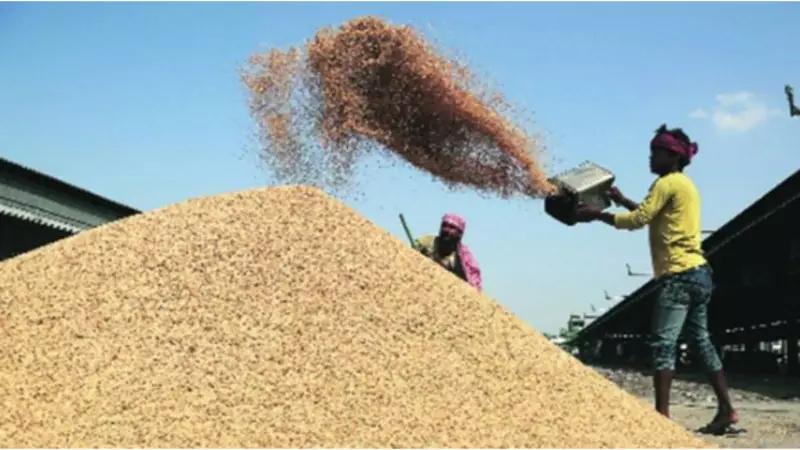
Punjab's crucial export sector is navigating turbulent waters as shifting global trade policies, geopolitical tensions, and supply chain reconfigurations put significant pressure on its economic engine. Exporters, particularly in flagship sectors like basmati rice and auto components, are reporting squeezed profit margins, delays in shipments, and forced contract renegotiations.
Structural Vulnerabilities Exposed
While Punjab's merchandise exports have shown nominal growth, rising from $5.79 billion in 2017-18 to $6.74 billion in 2023-24, this masks deeper concerns. The state's contribution to India's total exports has actually declined from 1.9% to 1.5% in the same period. Ranked 14th nationwide, Punjab continues to underperform relative to its industrial potential, highlighting a structural weakness: an over-reliance on a narrow set of markets and products.
This vulnerability is starkly visible in market concentration. Over one-third of Punjab's export value goes to just three countries: the United States, Saudi Arabia, and the United Kingdom. Half of all exports are confined to only 10 nations. Recent tariff changes, especially affecting the US which receives nearly 15% of Punjab's exports, have disrupted trade flows and underscored the risks of such dependence.

A Shifting Export Composition
The makeup of Punjab's export basket reveals a story of both diversification and lingering dependence. Engineering goods have become the anchor, increasing their share from 29% in 2017-18 to over 41% in 2023-24. However, Punjab's slice of India's total engineering exports has risen only marginally from 2.1% to 2.5%, indicating strong specialization but limited national scale.
Traditional pillars are weakening. Textiles, once central to Punjab's export identity, have declined from 31% to 21% due to higher production costs and intense competition. Agricultural exports have also fallen from 26% to 18%, hampered by climatic variability and non-tariff barriers.
Bright spots are emerging in new sectors. Electronics and IT-enabled services are gaining momentum, especially in the Mohali-Derabassi corridor. IT exports have surged from $50 million in 2017-18 to over $300 million in 2023-24, solidifying Mohali's role as a digital export hub.
Pathways to Resilience and Growth
Policy readiness has seen improvement, with Punjab moving from rank 18 in 2020 to rank 10 in NITI Aayog's Export Preparedness Index by 2022. The challenge now is translating this into sustained performance. The recently signed India-United Kingdom Free Trade Agreement (July 2025) presents a significant opportunity for sectors like engineering, textiles, and agro-processing through duty concessions.
Logistics infrastructure is expanding with Inland Container Depots in Ludhiana, Jalandhar, Amritsar, and Bathinda, and improved air connectivity via Amritsar and Chandigarh airports. The Attari Integrated Check Post in Amritsar remains a key asset, with trade growing from $260 million in 2022-23 to over $440 million in 2023-24, offering potential for overland trade with Central Asia if regional stability improves.
Experts argue building long-term resilience requires widening Punjab's export identity. This includes expanding the portfolio of Geographical Indication (GI) products beyond Basmati rice and Phulkari embroidery, leveraging the District as Export Hub initiative, and fostering an integrated strategy combining technology adoption, logistics efficiency, and sustainability compliance to meet evolving global standards.