

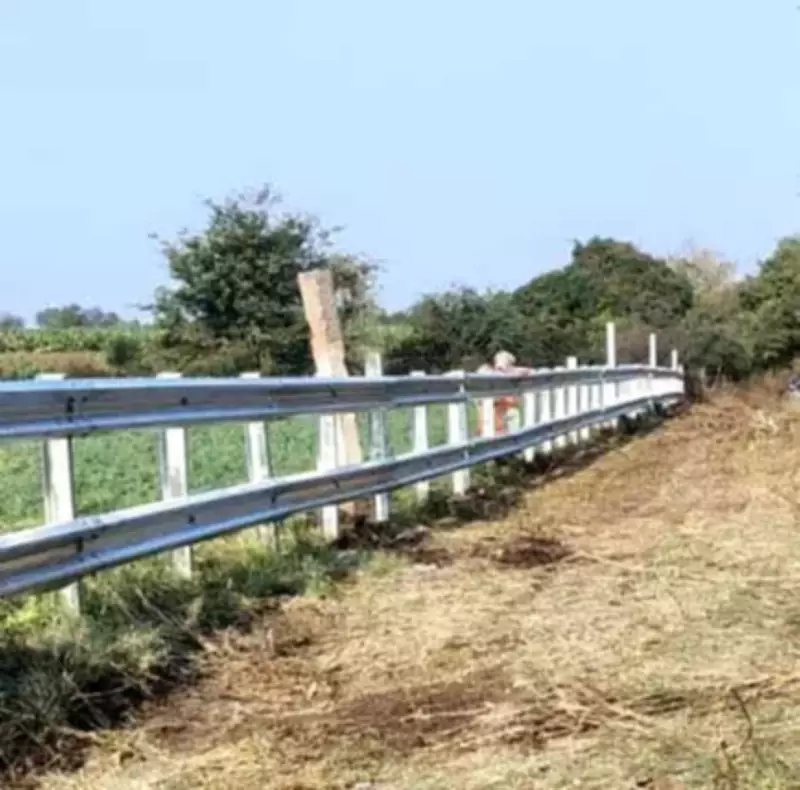
Central Railway Fencing in Nashik Draws Farmer Ire Over Cattle Access Issues
The Bhusawal Division of Central Railway has initiated a significant infrastructure project, fencing both sides of railway tracks in the Nashik region. This move, aimed at enhancing safety, has sparked strong opposition from local farmers who rely on crossing the tracks with their cattle to access agricultural lands.
Farmers Voice Concerns Over Increased Distances and Practical Challenges
Sharad Bhangale, a farmer from Jalgaon taluka, highlighted the practical difficulties arising from the new fencing. "Farmers have purchased land parcels on both sides of the tracks, and we routinely take our cattle to these farms for agricultural purposes," he explained. "With the fences in place, the distance between our homes and farms has ballooned from one kilometer to five kilometers. We are now forced to seek out vehicular underpasses (VUPs) for crossing, which adds considerable time and effort to our daily routines."
Ramesh Dushing, another farmer from Nashik, echoed these frustrations, noting that many are compelled to keep their cattle on others' properties due to the barriers. "We are grappling with a major logistical problem. The railways should consider leaving strategic openings in the fences to allow safe passage for farmers and livestock, which could be closed when not in use," he suggested.

Railway Officials Emphasize Safety Imperatives and Dismiss Openings as Unfeasible
A railway official defended the fencing initiative, citing critical safety concerns. "Trains now operate at speeds of up to 120 kmph, making cattle run-overs (CRO) a serious issue. These incidents not only result in livestock deaths but also disrupt train schedules and pose potential derailment risks that could endanger passenger lives. Fencing is the most effective measure to mitigate such hazards," the official stated.
The official firmly rejected the idea of incorporating openings in the fences. "Leaving gaps is not feasible because farmers often neglect to close them properly. If stray cattle enter and become trapped, it creates a dangerous situation. Who would be responsible for that? Currently, the only safe option is for farmers to use designated underpasses to cross the tracks," he emphasized.
Broader Implications for Agricultural Communities and Railway Operations
This conflict underscores a broader tension between infrastructure development and rural livelihoods. While the fencing project aims to modernize railway safety protocols, it inadvertently imposes new burdens on farming communities dependent on traditional access routes. The increased travel distances not only affect daily agricultural activities but also raise concerns about livestock welfare and farm productivity.
As discussions continue, stakeholders are urged to explore balanced solutions that address both safety mandates and the practical needs of farmers. Potential alternatives, such as enhanced underpass facilities or timed access points, could be considered to foster coexistence between advancing railway infrastructure and sustaining agricultural practices in the region.






