Raipur-Visakhapatnam Economic Corridor Set to Transform Travel and Trade
Travel from Raipur to the eastern seaboard is poised for a dramatic transformation, with journey times expected to be slashed by nearly half. The ambitious Raipur–Visakhapatnam economic corridor, currently under construction, promises to reduce travel duration from approximately 12 hours to just 6–7 hours. This significant improvement will be realized once the 464-kilometer, six-lane, access-controlled highway is fully operational, according to official statements.
Engineering Marvel: Chhattisgarh's First Highway Tunnel
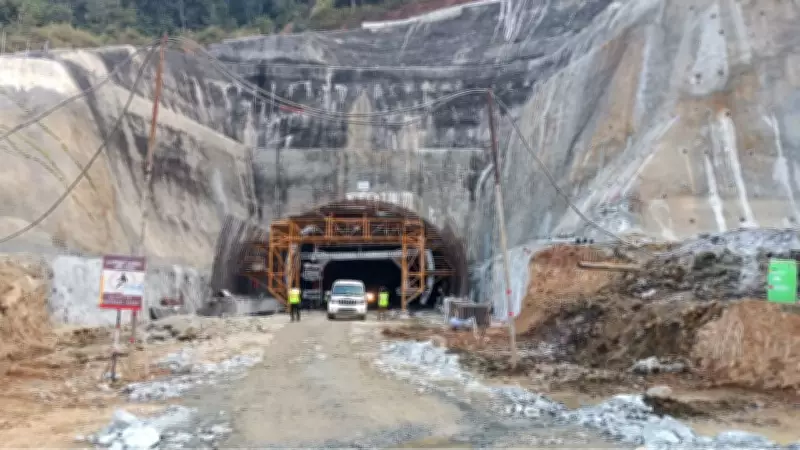
A standout feature of this project is the inclusion of a twin-tube tunnel, marking a historic first for Chhattisgarh's highway infrastructure. This 2.79-kilometer tunnel, strategically built beneath the Udanti–Sitanadi Tiger Reserve, serves as the signature element of the state's inaugural six-lane eco-corridor. It exemplifies innovative engineering that navigates challenging hilly terrain while prioritizing environmental preservation.
Designed as a high-speed logistics artery, the corridor will efficiently link central India to the bustling Visakhapatnam port. It stands as a model for large-scale road construction that advances rapidly without compromising fragile ecosystems. The National Highways Authority of India (NHAI) has invested Rs 16,491 crore in this transformative project, underscoring its national importance.

Progress and Phases: Construction Surpasses 70%
Construction progress has been robust, with overall completion exceeding 70%. The corridor, engineered for speeds of up to 100 km/h, is anticipated to be finalized within the next two years. In Chhattisgarh alone, the corridor spans approximately 125 kilometers, developed in three distinct phases from Jhanki to Marangpuri at an estimated cost of Rs 4,146 crore.
The phased construction includes:
- Jhanki–Sargi stretch covering 42 kilometers
- Sargi–Vasanvahi segment extending 57 kilometers
- Vasanvahi–Marangpuri portion spanning 25 kilometers
Various sections have already been completed, with package-wise finalization projected between April and November 2026. Subsequent integration with adjoining state stretches will determine the corridor's full commissioning timeline.
Wildlife Conservation: A Core Design Principle
Officials have emphasized the comprehensive wildlife mitigation measures integrated into the corridor's design. These initiatives demonstrate a commitment to coexisting with local fauna while ensuring safe transit. Key features include:
- 28 monkey canopies in the Udanti–Sitanadi region
- 8 specialized overbridges for elephants along the Dhamtari corridor
- 19 dedicated animal passages for species such as tigers and bears
Additional safety enhancements comprise animal underpasses and overpasses, strategic fencing at critical locations, advanced camera-based monitoring systems, and traffic impact attenuators to minimize collision-related fatalities.
Economic and Environmental Benefits
The corridor promises substantial economic and environmental advantages. Reduced travel time will lead to lower fuel consumption and decreased emissions compared to existing routes, contributing to greener logistics. Freight movement will see significant improvements, particularly for transporting minerals like iron ore to coastal ports.
Enhanced connectivity will benefit tribal and aspirational districts including Dhamtari, Kanker, Bastar, and Kondagaon, providing hundreds of thousands of people with better access to markets and essential services. This infrastructure development is set to stimulate regional growth and foster economic opportunities across central India.