

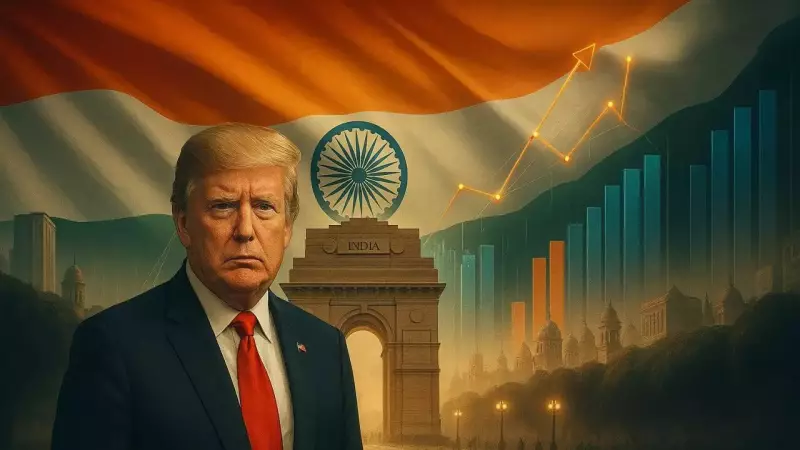
Reserve Bank of India (RBI) Governor Sanjay Malhotra has characterised the steep tariffs imposed by the United States on Indian exports as an opportunity for the sector, asserting that the overall impact on the Indian economy has been minimal. His comments came during a post-policy press conference, where he addressed concerns about the trade measures.
Minimal Economic Impact Despite Sharp Export Drop
When questioned about the effect of the tariffs, Governor Malhotra stated, "It's a minimal impact. It's not a very high impact because ours is mostly a domestic demand-driven economy." He acknowledged that certain sectors have faced challenges, prompting both the RBI and the Government of India to roll out relief packages to support them.
However, the data reveals a significant contraction in trade. India's exports to the United States, its largest overseas market, declined by 28.5% between May and October 2025, falling from $8.83 billion to $6.31 billion. This drop followed a series of escalating US tariffs, which began at 10% on April 2, increased to 25% on August 7, and ultimately reached 50% by the end of August 2025. This progression has rendered Indian products among the most heavily taxed in the US market.

Tariffs as a Catalyst for Diversification and Strength
Striking an optimistic note, Malhotra framed the situation as a chance for Indian exporters to evolve. "I think this is an opportunity for us. Exporters have already started looking out, improving, not only their productivity but diversifying, etc. We should be able to come out of this stronger going forward," he explained.
This perspective comes amid ongoing bilateral trade discussions between India and the US. While talks for a trade agreement have resumed, India has firmly outlined its non-negotiable areas. The country has drawn red lines on sensitive sectors like agriculture and dairy, and continues to emphasise its strategic autonomy, particularly concerning its energy procurement. Notably, 25% of the US tariffs target India's crude oil imports from Russia, a point of strategic divergence between the two nations.
Navigating Strategic Autonomy and Trade Talks
The backdrop to this economic dialogue is a complex geopolitical landscape. The US, under President Donald Trump, imposed the 50% tariffs in August 2025. India's stance during the renewed trade talks reflects a balancing act: engaging with a major economic partner while protecting its core interests and foreign policy independence.
The RBI Governor's confidence appears rooted in the resilience of India's domestic consumption, which cushions the blow from external trade shocks. The combined response from the central bank and the government, through supportive measures, aims to mitigate sector-specific pains while leveraging the moment to build a more robust and diversified export framework for the future.






