

New Delhi: During the prestigious India Energy Week held in Goa, Russian state-run atomic energy corporation Rosatom unveiled an integrated proposal that could significantly transform India's nuclear energy landscape. The comprehensive presentation focused on large power units alongside innovative small modular reactors (SMRs), including the unique Russian technology of floating power units.
Strategic Partnership for Nuclear Development
Rosatom's presentation emphasized India's status as a strategic partner, with cooperation that has been developing over many years. The Russian corporation demonstrated a comprehensive approach to addressing challenges in the nuclear energy sector while showing remarkable openness to implementing joint research projects with Indian counterparts.
Advanced Research Reactor Collaboration
At the Goa event, Russian company officials paid special attention to possibilities for scientific and technical cooperation centered around the multipurpose fast research reactor MBIR. This advanced facility, scheduled for commissioning in 2028, is poised to become the most powerful research reactor globally. India has received a formal invitation to join an international consortium based on this reactor and participate in multilateral research programmes that could advance nuclear science significantly.

Expanding Beyond Energy Generation
Egor Kvyatkovsky, CEO of Rosatom International Network, highlighted the broader vision for Indo-Russian nuclear cooperation. "India is a strategic partner, cooperation with which has been building for many years and is aimed at developing nuclear and related industries," he stated. "Joint nuclear projects form a solid technological and human foundation, designed for decades to come."
Kvyatkovsky further elaborated on the potential for deepening cooperation across multiple domains: "We see great potential for deepening cooperation in both large power units and small modular reactors (SMRs) construction projects, as well as in non-energy areas such as nuclear medicine, isotope supply, joint research projects, additive technologies and digital solutions."
Existing Collaboration and New Opportunities
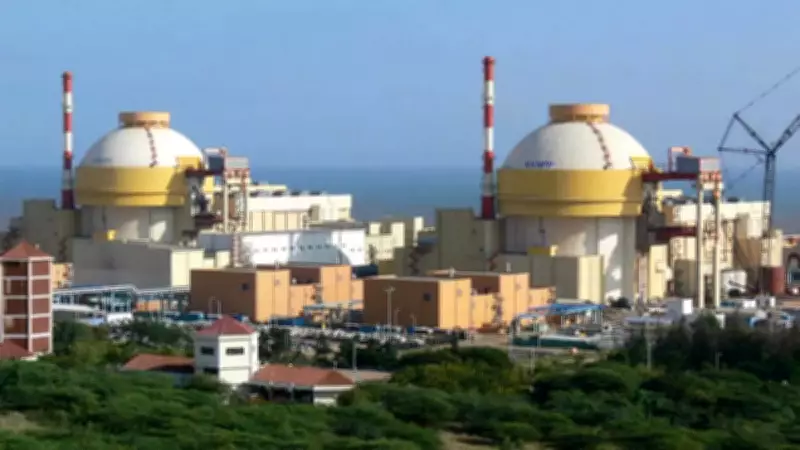
Rosatom has been actively assisting India in constructing six 1,000 MW VVER-1000 pressurised water reactors at the Kudankulam nuclear power plant in Tamil Nadu. This flagship project demonstrates Rosatom's comprehensive approach, as Kvyatkovsky explained: "The experience of implementing our flagship project, Kudankulam Nuclear Power Plant, shows that we do not just work on individual tasks for the facility, but accompany the project throughout its life cycle, contributing to the industrial transformation of India."
Small Modular Reactors for Remote Areas
The discussions at India Energy Week also covered new areas of cooperation, particularly the construction of Russian-designed low-power nuclear power plants (ASMMs) in India. These ASMM technologies are specifically focused on providing clean electricity to remote areas with limited network infrastructure, as well as supplying energy to individual industrial enterprises that require reliable power sources.
Floating Power Units for Coastal Regions
One of the most innovative aspects of Rosatom's proposal involves floating power units, a unique Russian technology particularly suited for countries like India with extensive coastlines and developed island territories. This technology could potentially revolutionize energy access in coastal regions and island territories that face challenges with traditional power infrastructure.
The comprehensive nature of Rosatom's proposals at India Energy Week reflects the deepening strategic partnership between Russia and India in the nuclear energy sector, with potential benefits extending across energy security, technological advancement, and industrial development for decades to come.






