

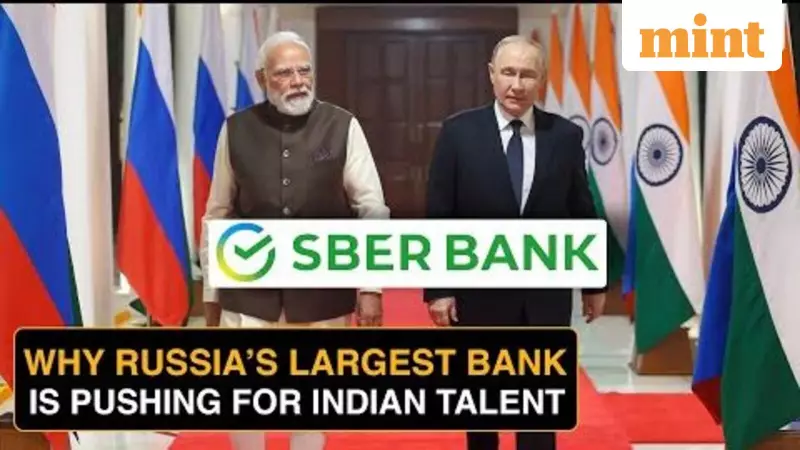
In a significant development highlighting the deepening economic ties between India and Russia, one of Russia's largest financial institutions has issued a call for a large-scale migration of Indian workers. This move comes against the backdrop of a severe labour shortage in Russia and during a pivotal state visit by President Vladimir Putin to meet Prime Minister Narendra Modi.
A Strategic Pivot Beyond Energy
The narrative of India-Russia relations, long dominated by defence and energy imports, is undergoing a substantial transformation. While oil trade remains crucial, Moscow is now actively looking to diversify its economic engagement with New Delhi. The focus is expanding into new, critical sectors including information technology (IT), pharmaceuticals, and machinery.
This strategic shift was underscored by a direct appeal from Russia's Sberbank, which highlighted an acute labour crisis within Russia. The country is reportedly facing a shortage of approximately 3 million workers, a gap it hopes to fill with skilled and semi-skilled professionals from India. This request aligns with the broader discussions held during high-level diplomatic engagements in early December 2025.

Boosting Trade and Bypassing the Dollar
The push for workforce collaboration is part of a larger, rapidly accelerating economic partnership. Bilateral trade mechanisms designed to circumvent Western sanctions have seen remarkable success. The use of local currencies for trade settlements has surged, with transactions in rupee and rouble witnessing a staggering 3.5-fold increase.
This de-dollarisation effort is facilitating smoother trade flows. In a testament to growing business confidence, around 6,000 new Indian companies have been registered to operate in the Russian market. Both nations are steadily progressing towards an ambitious bilateral trade target of $100 billion, moving well beyond traditional commodity exchanges.
Implications for the Future Partnership
The call for Indian migrant workers signals a new chapter in bilateral relations, intertwining human capital with trade and strategic autonomy. For India, it presents opportunities for employment and expanded market access in a friendly country. For Russia, it offers a solution to demographic and labour market challenges while strengthening economic sovereignty.
The burgeoning partnership, now encompassing energy, trade, finance, and workforce mobility, demonstrates a resilient alliance adapting to global geopolitical shifts. The success of the rupee-rouble payment system and the onboarding of thousands of firms indicate a robust foundation for this expanded collaboration, potentially reshaping economic corridors between the two nations.






