

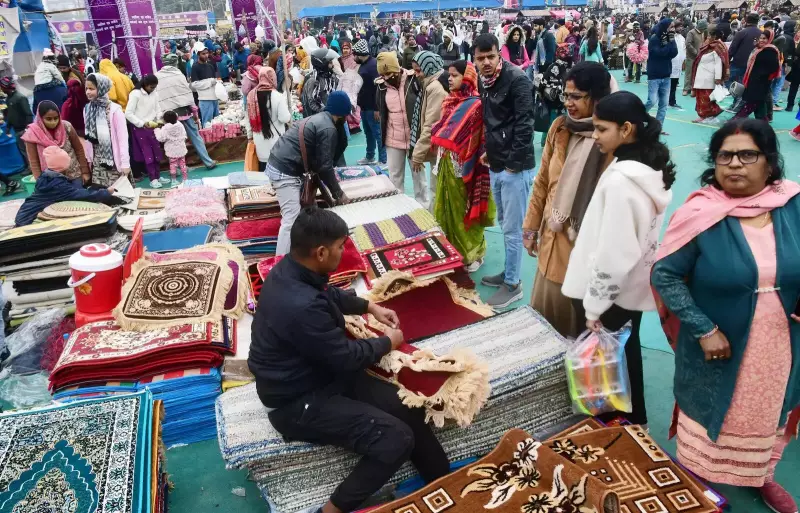
The vibrant Saras Mela at Patna's iconic Gandhi Maidan drew its curtains on Sunday, marking the end of an exceptionally successful 24-day celebration of rural craftsmanship. The event, which far exceeded initial expectations, attracted a massive footfall of nearly 18 lakh visitors and generated a direct revenue of over Rs 28.52 crore for artisans, showcasing the immense commercial potential of India's grassroots talent.
Overwhelming Response Leads to Extension
Organised by the state's rural development department, the fair commenced on December 12 and was originally planned for a 17-day run. However, the unprecedented and continuous public demand compelled the authorities to extend the event by an additional week. The mela finally concluded on January 4, becoming a landmark event in the city's cultural calendar. Rural Development Minister Shravan Kumar graced the closing ceremony, personally touring the stalls and interacting with creators from 25 different states.
Minister Kumar expressed deep admiration for the skill on display, particularly praising the Jeevika Didis—women from self-help groups—whose stalls featured an impressive array from handloom textiles to organic spices. "The craftsmanship here is truly inspiring," he noted during his visit.

A Marketplace of Stories and Success
For visitors like Anika Kumari, a local college student, the mela was more than a shopping destination. "I am a regular visitor every year, but the diversity and quality this season were exceptional," she shared, holding bags of terracotta pottery. "When you see the products, you can sense the dedication and hard work behind them. It creates a connection that makes you want to support these artisans wholeheartedly."
The closing ceremony also served as a platform to honour outstanding achievers. Artisans Premlata Devi from Bihar and Rahnuma from Uttar Pradesh were felicitated on the main stage with mementoes for recording exceptional sales. Principal Secretary Pankaj Kumar highlighted that the stellar performance of 209 participating self-help groups had sparked national conversations. "This success firmly establishes that the Bihar model for rural empowerment is delivering tangible results," he stated.
Beyond Commerce: Food, Learning, and Community
The mela's appeal extended far beyond mere commerce. For many families, the 'Didi Ki Rasoi' food stalls became a major attraction. Government employee Rajesh Kumar, who visited with his family for a final meal of litti chokha and rabri-jalebi, echoed a common sentiment: "This has been the highlight for us. We are genuinely sad that the mela is ending."
Interestingly, this year the Saras Mela transformed into an informal hub of knowledge exchange. Researchers and management students were seen actively engaging with the rural women entrepreneurs, seeking to understand their business strategies and success mantras. A spokesperson for the event observed, "Aspiring MBAs interacting with Jeevika Didis to decode their business secrets was a common sight. It proves that the grassroots wisdom of these women is now being acknowledged as a legitimate, valuable lesson for formal academia."
The resounding success of the 2023-24 edition of Saras Mela has not only provided a significant economic boost to rural artisans but has also reinforced Patna's position as a key cultural and commercial confluence for traditional Indian handicrafts and entrepreneurship.






