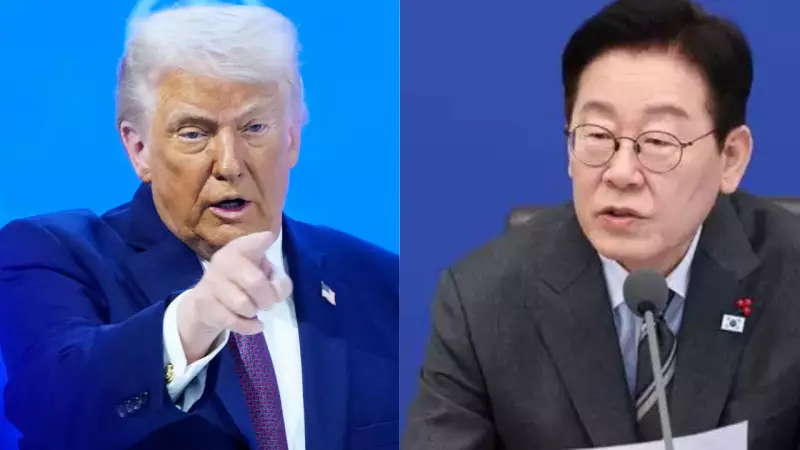
Trump Imposes 25% Tariffs on South Korean Goods Over Trade Deal Dispute
In a significant escalation of trade tensions, former US President Donald Trump announced on Monday that he is raising tariffs on imports from South Korea to 25 percent. The increased duties specifically target key sectors including automobiles, lumber, and pharmaceuticals. Trump justified this aggressive move by accusing South Korea's legislature of failing to uphold its trade agreement with the United States.
Unratified Agreement Sparks Tariff Hike
Trump expressed frustration that South Korea's National Assembly has not approved the trade deal he negotiated with President Lee Je Myung on July 30, 2025. The agreement was reaffirmed during Trump's visit to Asia on October 29, 2025, yet remains unratified. Through a post on his Truth Social platform, Trump declared: "Because the Korean Legislature hasn't enacted our Historic Trade Agreement, which is their prerogative, I am hereby increasing South Korean TARIFFS on Autos, Lumber, Pharma, and all other Reciprocal TARIFFS, from 15% to 25%."
The former president emphasized the importance of trade reciprocity, stating: "Our Trade Deals are very important to America. In each of these Deals, we have acted swiftly to reduce our TARIFFS in line with the Transaction agreed to. We, of course, expect our Trading Partners to do the same."

Background of US-South Korea Trade Relations
South Korea represents a crucial trading partner for the United States, consistently ranking among America's top ten import sources. American businesses and consumers import approximately $150 billion worth of goods from South Korea annually. The current tariff increase marks a reversal from previous efforts to reduce trade barriers between the two nations.
The trade relationship has experienced several twists in recent months:
- In July 2025, Trump announced a preliminary trade agreement with South Korea's president
- Progress stalled for months due to disagreements over a US-sought investment pledge
- The two leaders finalized the agreement in October 2025 during Trump's Asian trip, including a $350 billion investment commitment in the United States
- In November 2025, both governments released a "fact sheet" outlining the deal to move implementation forward
Tariff Rollback and Market Impact
The now-threatened agreement had included reduced tariffs for both countries, with US import duties capped at 15 percent. This represented a significant rollback from the 25 percent tariff rate Trump had announced earlier in 2025 on South Korea's "Liberation Day" in April. That previous tariff announcement had unsettled global markets and created uncertainty in international trade circles.
South Korea has been working to implement a separate deal announced with Washington in November aimed at reducing US tariffs on its exports. More recently, Seoul has been in discussions with US officials regarding its investigation into US-based e-commerce company Coupang, launched following a major data leak incident.
Pattern of Tariff Threats
Trump's latest tariff announcement follows at least three previous threats that were ultimately not implemented:
- A proposed 10 percent tariff on Canada after Ontario ran an anti-tariff advertisement during the World Series
- Threatened tariffs on European countries concerning Greenland
- A 100 percent tariff on Canada that was announced just last week
This pattern suggests a strategy of using tariff threats as negotiating leverage in international trade discussions, though the South Korea tariff increase appears to be moving toward implementation given the specific percentages and sectors mentioned.
The tariff escalation comes at a sensitive time in US-South Korea relations, with both countries navigating complex economic and geopolitical considerations in the Asia-Pacific region. The move is likely to impact supply chains, consumer prices, and diplomatic relations between the two longstanding allies.