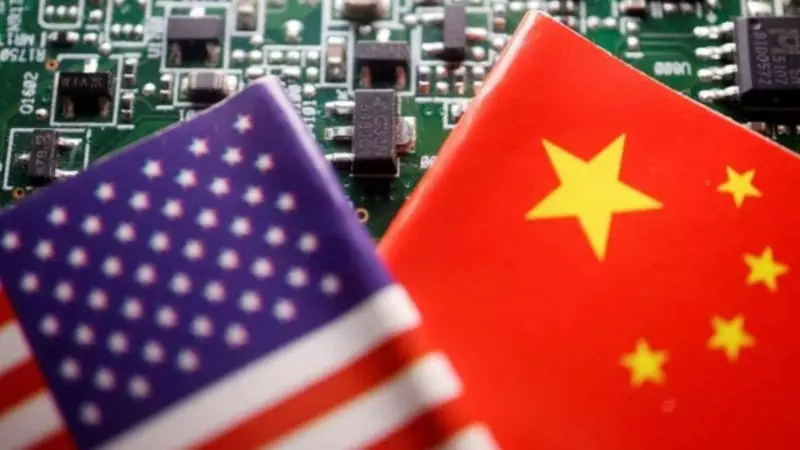
Trump Announces 25% Tariff on Advanced AI Chips for China
President Donald Trump has imposed a 25% tariff on select advanced artificial intelligence chips sold to China. This decision comes just hours after the United States and Taiwan finalized a trade agreement to build semiconductor chips and manufacturing facilities on American soil.
The White House cited significant economic and national security risks as the primary reasons for this move. Trump stated, "We're allowing them to do it, but the United States is getting 25% of the chips, in terms of the dollar value."
Targeted Chips and Companies
The tariff specifically applies to high-performance AI chips from leading manufacturers Nvidia and AMD. Key models affected include:

- Nvidia's new H200 AI processor
- AMD's MI325X chip
These chips are crucial for training large language models that power AI chatbots like ChatGPT and Gemini. Companies must now pay the 25% tariff before selling these chips to approved Chinese customers.
Background and Timing
This announcement follows nearly a month of debate about whether Nvidia, AMD, and Intel should maintain their global lead in AI chips by continuing sales to China or restricting exports. The tariff represents a strategic shift in US policy.
The White House explained in a proclamation that the United States currently manufactures only about 10% of the chips it requires. This heavy reliance on foreign supply chains, particularly from countries like Taiwan, prompted the action.
Scope and Exceptions
According to a US fact sheet, the tariff applies specifically to AI chips from Nvidia and AMD that are imported into the United States and then re-exported to other countries. Important exceptions include:
- Chips and devices imported for US data centers
- Startup applications
- Non-data center consumer uses
- Non-data center civil industrial applications
- US public sector applications
Industry Response and Future Implications
Nvidia responded to the tariff announcement with a statement sent to CNN. The company said, "Offering H200 to approved commercial customers, vetted by the Department of Commerce, strikes a thoughtful balance that is great for America."
It's important to note that Nvidia's H200 chip, sold in global markets, represents the company's second fastest AI chip to date. This differs from their previous H20 chip, which was a lower-performance accelerator designed exclusively for the Chinese market.
While US companies like Nvidia, AMD, and Intel design their own chips, most manufacturing occurs through the Taiwan Semiconductor Manufacturing Corporation. Nvidia has reportedly increased production of its H200 chip to meet anticipated demand from China.
Broader Context and Potential Future Actions
The United States has not ruled out implementing broader tariffs on semiconductor imports and products in the near future. Officials indicated they are developing programs to encourage companies to manufacture chips locally.
Meanwhile, China faces its own challenges. The Chinese government seeks to bolster its domestic semiconductor market while fearing it might fall behind in the global AI race. According to reports from Nikkei Asia, China is drafting rules to regulate how many AI chips companies can purchase from manufacturers like Nvidia and AMD.
The Chinese government's response to these new US tariffs remains unclear. Both nations continue to navigate complex economic and technological landscapes as they position themselves in the competitive AI sector.