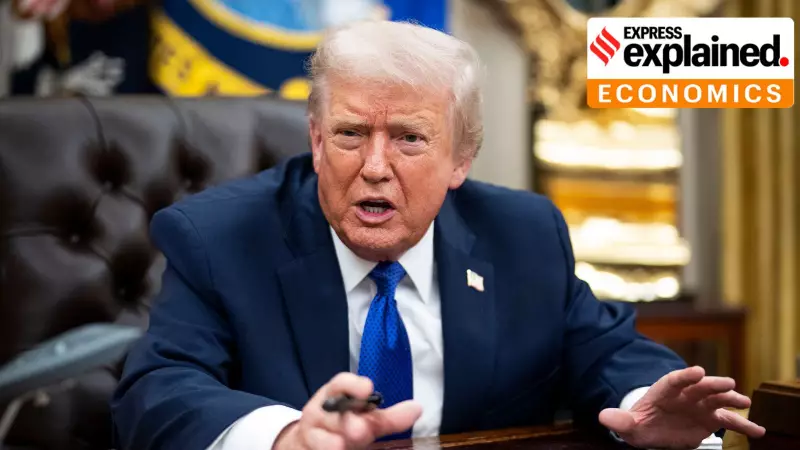
Indian exporters of tea and rice face mounting pressure after US President Donald Trump announced new trade restrictions targeting Iran. The move creates fresh headwinds for businesses already operating on thin margins in challenging global markets.
Trump Announces Immediate Tariffs on Iran Trade Partners
President Donald Trump declared 25 percent tariffs on Tuesday against any country conducting business with Iran. He made the announcement amid ongoing anti-regime protests in Iran that have turned deadly in recent weeks.
"Effective immediately, any Country doing business with the Islamic Republic of Iran will pay a Tariff of 25 per cent on any and all business being done with the United States of America. This Order is final and conclusive," Trump stated in a post on his TruthSocial platform.

The new tariffs come as New Delhi already contends with existing 50 percent tariffs from the United States. These previous measures have negatively impacted investments and labor-intensive exports from India.
India-Iran Trade Relationship Under Strain
Official data reveals a significant decline in direct bilateral trade between India and Iran. The current fiscal year shows goods trade worth approximately $1.6 billion, a dramatic drop from pre-COVID-19 levels when total trade approached $15 billion.
Before the pandemic, Iranian crude exports to India reached $12 billion in fiscal year 2019. Total exports between the two nations neared $4 billion during that same period.
Both countries maintained trade through a Vostro account system after Iran's removal from the SWIFT banking network in 2011. However, the US Office of Foreign Assets Control imposed product-specific sanctions in 2019 that further restricted commercial exchanges.
Tea Exporters Face Multiple Market Challenges
Industry representatives express particular concern about the impact on tea exports. Iran has traditionally served as a strong market for Indian orthodox tea varieties.
The new tariffs compound existing difficulties tea exporters encounter in other key markets. Pakistan and Russia, once significant destinations for Indian tea, have implemented their own restrictions in recent years.
Exporters worry the additional financial burden from Trump's tariffs will make Indian tea less competitive in the Iranian market. This comes at a time when global tea prices remain volatile and production costs continue rising.
Rice Exports Also Vulnerable to New Measures
Indian rice exporters similarly face uncertainty from the latest trade announcement. Iran represents an important market for various rice varieties, particularly basmati rice which commands premium prices internationally.
The 25 percent tariff could disrupt established trade patterns and force exporters to absorb additional costs or seek alternative markets. Both options present significant challenges for businesses operating with narrow profit margins.
Background: Iran's Domestic Unrest
The tariff announcement coincides with ongoing protests in Iran that began on December 28. Demonstrations erupted after the Iranian rial collapsed and prices surged dramatically, severely impacting living costs for ordinary citizens.
Protests quickly spread across the country and evolved into direct challenges against Iran's clerical leadership. Human rights organizations report at least 544 people have died during the demonstrations over the past fifteen days, including eight children.
President Trump previously warned that the United States might respond if Iranian forces continued using violence against protesters. The new tariffs represent his administration's latest action concerning the situation in Iran.
The combined effect of existing trade restrictions and these new tariffs creates a complex challenge for Indian exporters. Businesses must now navigate multiple layers of international trade policy while maintaining competitiveness in global markets.