

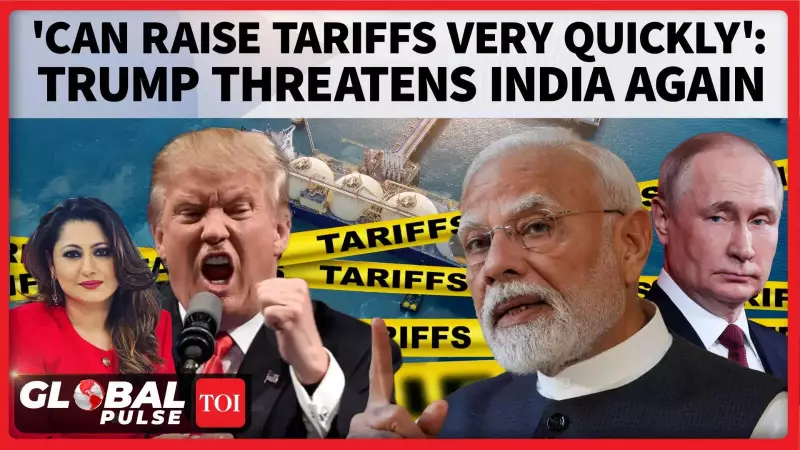
In a move that casts a shadow over bilateral trade relations at the start of the new year, former US President Donald Trump has issued a stark warning to India, threatening to impose higher tariffs on Indian goods. The threat is linked directly to New Delhi's continued procurement of Russian oil.
Trump's Direct Warning Aboard Air Force One
The remarks were made to journalists while Trump was traveling on Air Force One on January 05, 2026. He explicitly stated that Washington could raise tariffs on imports from India if the country does not offer more assistance to the United States concerning the issue of Russian crude oil. Trump acknowledged that India has already scaled back its purchases from Russia but indicated this was insufficient.
In a pointed message aimed at the Indian leadership, Trump asserted, "Modi knew I was not happy". He emphasized the importance of the situation by adding that it was "important to make me happy". The former president underlined the immediacy of the potential action, warning that tariffs could be increased "very quickly" if he deemed it necessary.

Implications for the India-US Trade Relationship
This public pronouncement throws into question the future of a comprehensive trade deal between the two nations, hopes for which have been discussed for years. The start of 2026 now finds the relationship under significant strain due to this geopolitical pressure point. India's strategic and economic balancing act, maintaining ties with both Russia and the West, is facing a direct challenge from a potential returning US administration.
The threat leverages one of Trump's preferred policy tools—tariffs—to compel a shift in India's foreign policy and trade alignments. It signals a potential return to a transactional and pressure-based approach to international diplomacy if Trump returns to power.
What Comes Next for New Delhi?
Indian policymakers are now confronted with a complex dilemma. On one hand, securing affordable energy resources remains a critical priority for the nation's economy. On the other, access to the vast US market and maintaining robust strategic ties with Washington are equally vital. Trump's comments suggest that India's gradual reduction of Russian oil imports may not be enough to satisfy US demands, potentially requiring a more drastic shift.
The development sets the stage for a tense period in Indo-US relations, where trade, energy security, and geopolitical strategy are intricately intertwined. The Indian government's response to this public ultimatum will be closely watched by global observers and markets alike.






