

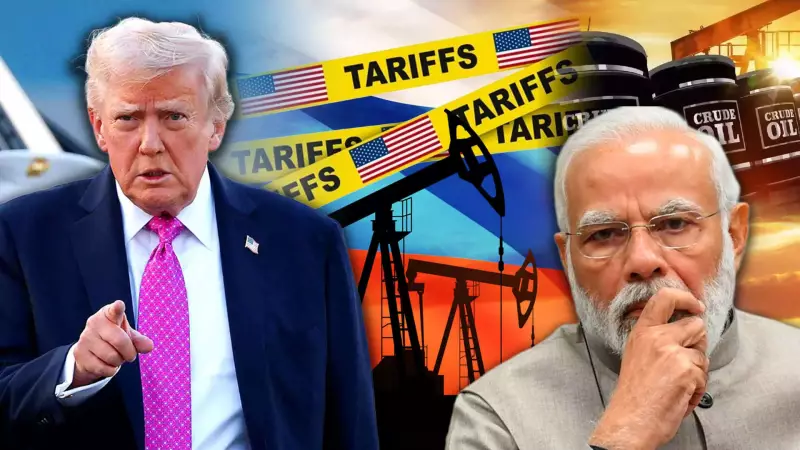
In a move set to send shockwaves through global energy markets, former US President Donald Trump has signed a bill that could impose crippling tariffs on countries purchasing Russian oil. The legislation, approved on January 8, 2026, authorizes tariffs as high as 500%, explicitly naming India and China as potential primary targets.
The Sanctions Bombshell and Its Direct Aim
The core objective of the newly approved bill is to sever a critical financial lifeline for Moscow, directly targeting the revenues that fund its ongoing war efforts. By wielding the threat of astronomical tariffs, the Trump administration aims to force nations currently buying Russian crude to seek alternative suppliers. This strategy marks a significant escalation in Washington's attempts to economically isolate Russia, but it simultaneously risks igniting serious trade disputes with some of the world's largest economies.
India, which has consistently defended its right to source affordable energy in the interest of its national economy, finds itself squarely in the crosshairs. The Indian government has maintained that its energy import strategy is a matter of sovereign national interest, crucial for maintaining growth and controlling inflation. However, data suggests a pragmatic shift is already underway, with New Delhi quietly reducing its dependence on Russian crude in recent months, likely in anticipation of such geopolitical pressures.

International Reactions and India's Diplomatic Tightrope
The US move has received endorsement from key European allies involved in the conflict. Poland's Foreign Minister publicly welcomed India's reported decision to scale back Russian imports, characterizing it as a constructive step that undermines Russia's military capabilities. This creates a complex diplomatic landscape for New Delhi, which has long prided itself on an independent foreign policy.
Despite these nuanced shifts, President Trump has adopted a hardline public stance, directly linking trade policy to energy choices. He has warned of even harsher penalties if countries do not comply, keeping the pressure firmly on nations like India. As the bill moves through the final stages towards becoming law, the Indian government is engaged in a delicate balancing act. Its key challenges are multifaceted:
- Managing pressure from its strategic partner, the United States.
- Safeguarding its economic stability and energy security for over a billion citizens.
- Preserving its autonomy in foreign policy decision-making.
- Securing reliable and affordable oil from alternative global suppliers.
Navigating an Uncertain Energy Future
The looming threat of 500% tariffs forces India to urgently rework its long-term oil import strategy. This involves accelerating diversification efforts and potentially locking in deals with suppliers in the Middle East, Africa, and the Americas. The situation underscores the growing intersection of geopolitics, global trade, and energy security.
The coming weeks will be critical as India calibrates its response. The nation must protect its economic interests while navigating the fraught dynamics of a world where energy trade is increasingly weaponized. The outcome will not only affect fuel prices in India but could also reshape alliance structures and trade routes in the Indo-Pacific region and beyond.






