

Trump's Threat to India Over Russian Oil Imports Puts Nayara Refinery in Jeopardy
NEW DELHI: A stern warning from US President Donald Trump to reimpose a 25% "penalty" on India if it does not cease purchasing Russian crude oil has significantly intensified the uncertainty surrounding the operations of the Nayara refinery located in Jamnagar, Gujarat. This escalating crisis has now sparked serious discussions regarding a potential change in ownership for the facility.
Ownership and Operational Challenges
While the refinery, under normal market conditions, would be considered an attractive acquisition target, the Trump administration's uncompromising stance is creating a major deterrent for any prospective buyers. This cloud of doubt is expected to linger unless there is a substantial and unexpected breakthrough in international negotiations aimed at persuading Russia to halt its military aggression in Ukraine.
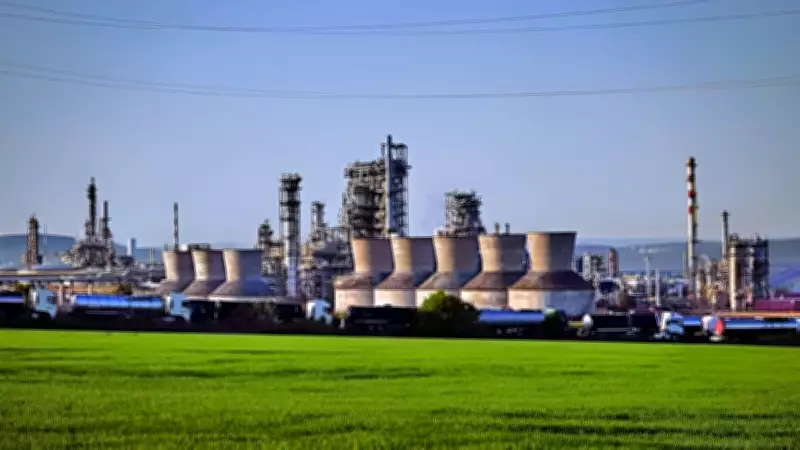
The Nayara refinery, which boasts an annual capacity of 20 million metric tonnes and is situated in Vadinar, Gujarat, holds the distinction of being India's second-largest single-site refinery. It specializes in processing heavy crude oil. The majority stake in this critical energy asset is owned by Rosneft, Russia's state-controlled energy behemoth. The Trump administration has sanctioned Rosneft as part of its strategy to pressure Russian President Vladimir Putin into de-escalating the conflict in Ukraine.

Prior to the imposition of these US sanctions, the Nayara refinery was almost entirely reliant on Russian crude as its primary feedstock. This dependency has now placed the facility in a precarious position.
India's Negotiating Strategy and Market Realities
Energy analysts suggest that, with the immediate viability of the refinery at stake, the Indian government is likely to continue its diplomatic negotiations with the Trump administration. The goal would be to secure permission for the continued import of reduced volumes of Russian crude to keep the refinery operational.
Indian refineries have already been progressively reducing their purchases of Russian oil. However, industry observers note that an immediate, complete halt is not practically feasible. Refiners have already secured Russian cargo shipments for the next eight to ten weeks, and canceling these contracts is not a viable option. This logistical reality does little to dispel the overarching uncertainty about Nayara's long-term fate.
"My sense is that India will still bargain with the US to import some amount of oil from Russia, especially for the Nayara refinery," stated Prashant Vasisht, Senior Vice President at the credit rating agency ICRA.
Strategic and Economic Considerations for India
Energy expert Narendra Taneja emphasized that India is expected to continue importing oil from Russia, albeit at diminished volumes. He cited two primary reasons for this continuation: to assert the nation's strategic autonomy in foreign policy and to maintain favorable domestic political optics.
Taneja further elaborated on the broader economic context, noting, "Since India has committed to purchasing $500 billion worth of goods from the US over a five-year period, imports of oil, gas, and LPG present the most efficient method to rapidly accumulate these figures. This approach is not entirely disadvantageous, as the anticipated returns—including access to capital, advanced technology, and greater entry into American markets—are quite compelling."
Current Import Trends and Data
According to official commerce department data, Russia remains India's largest supplier of crude oil. For the fiscal year 2025-26 (April to December), Russian imports accounted for 31.5% of India's total crude purchases, amounting to $105.1 billion.
Despite a noticeable decline, the dependency is significant. Imports from Russia fell to $2.7 billion in December 2025, marking the lowest monthly value in three years and representing a nearly 27% decrease from the $3.7 billion recorded in November. Nonetheless, Russia retained its top position, underscoring the complex challenge India faces in balancing its energy needs with international diplomatic pressure.
The situation leaves the future of the strategically important Nayara refinery hanging in the balance, caught between geopolitical tensions and economic necessities.






