

President Donald Trump's recent move to seize control of Venezuela's vast oil resources is not an isolated event. It is the dramatic culmination of a century-long relationship between the United States and the South American nation, a turbulent saga built on black gold, marked by spectacular booms, painful busts, and a legacy of complex challenges that still loom large.
The Gusher That Started It All: 1922 and the American Rush
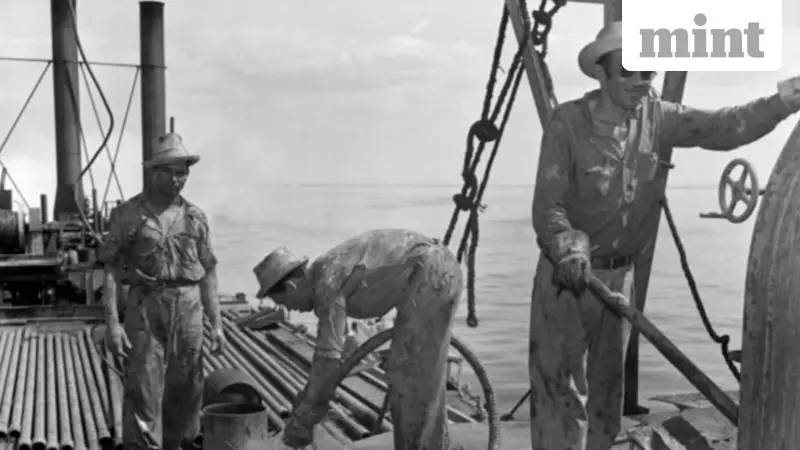
The story begins in December 1922, with a diplomatic cable from Caracas. U.S. diplomat Willis C. Cook reported to Washington about a monumental oil discovery. A well in northwestern Venezuela had struck a gusher at 1,500 feet, and the flow was so powerful it could not be controlled. Follow-up messages included photos of crude oil spurting skyward. This event, the Barroso II blowout, marked Venezuela's explosive entry as a major global energy player.
American companies, armed with capital and geographic advantage, swiftly outpaced British and other rivals to dominate the nascent industry. The 1920s saw breakneck growth, filling the coffers of Venezuela's authoritarian leader, General Juan Vicente Gómez, and creating fortunes for American oil magnates like William F. Buckley Sr.

From Partnership to Nationalism: The Pendulum Swings
The relationship's initial openness gave way to rising resource nationalism. Around World War II, Venezuela established a landmark 50-50 profit-sharing model with foreign firms, a framework hailed by energy historian Daniel Yergin as a global milestone. This momentum continued, leading Venezuela to co-found OPEC in 1960 alongside Saudi Arabia.
The most decisive shift came in 1976: the full nationalization of Venezuela's oil industry. The state takeover ended a half-century of foreign dominance, affecting giants like Exxon and Gulf Oil. While the transition was smoother than in other countries—thanks to the strong talent at the newly formed state company Petróleos de Venezuela (PdVSA)—it fundamentally changed the rules of the game.
PdVSA later sought closer ties with the U.S. by investing in American refining assets, most notably the purchase of Citgo. Energy economist Philip Verleger, who consulted for Citgo, noted that PdVSA's innovations in processing Venezuela's heavy crude were key to its profitability.
Chávez, Decline, and Trump's High-Stakes Gamble
A brief period of liberalization in the 1990s saw U.S. imports of Venezuelan crude peak at 1.6 million barrels per day in 1997. However, the political landscape was shifting. The rise of strongman President Hugo Chávez in the early 2000s reversed course. He dismissed thousands of PdVSA professionals, like Luis Pacheco, and forced foreign companies into joint ventures with majority state control.
This pressure drove ExxonMobil and ConocoPhillips to abandon assets worth tens of billions, leaving Chevron as the sole major U.S. producer in the country. As former U.S. Ambassador Bill Brownfield noted, the relationship with Chávez became unworkable, pushing Caracas toward allies like China and Russia.
Years of underinvestment, mismanagement, and then crippling U.S. sanctions under President Trump devastated the industry. Venezuela's oil output has cratered to just over 900,000 barrels per day, a shadow of its former self. Trump's recent military incursion and ouster of Nicolás Maduro now promises a revitalization led by U.S. capital and expertise.
The Daunting Road Ahead for Investors
Despite the political shift, industry veterans warn that history casts a long shadow. The fundamental challenge remains a political establishment deeply wary of foreign control for generations. "If you're an investor, [giving] 60% to the guy who doesn't do anything isn't a very exciting thing," said Rafael Sandrea, a former oil-data expert in Caracas who now runs a U.S. consultancy.

Experts like Pacheco, now a fellow at Rice University's Baker Institute, caution that oil companies are "used to danger" but are "not fools" based on past experiences in Venezuela. The plan to restore production to its late-1990s glory would require not just massive investment but also a profound shift in the contractual and political mindset that has defined Venezuela's oil sector for decades. The century-long tale of U.S. and Venezuelan oil is entering its most unpredictable chapter yet.





