

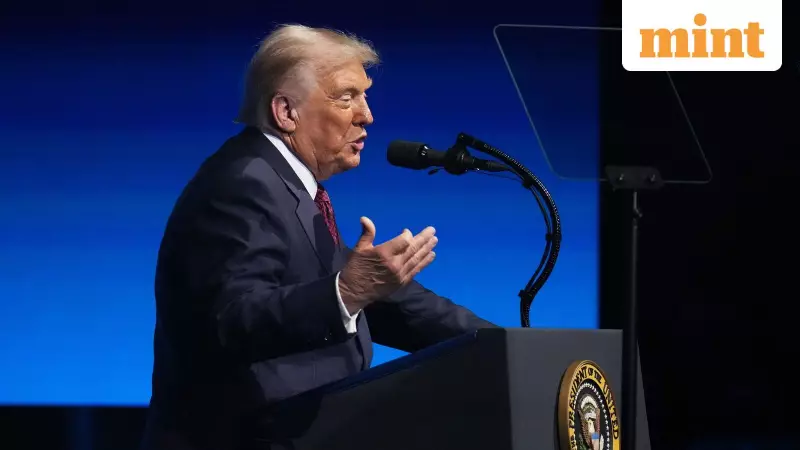
In a bold move to reshape global energy markets, President Donald Trump is convening top executives from the world's largest oil companies at the White House. The high-stakes meeting, scheduled for Friday, follows the dramatic U.S. military operation that ousted Venezuelan leader Nicolás Maduro just days ago. Trump's agenda is clear: to secure commitments for a massive expansion of oil drilling in Venezuela, with the explicit goal of crashing global oil prices to around $50 per barrel.
The High-Stakes White House Summit
The meeting, set for 2:30 p.m. ET, brings the CEOs face-to-face with a president determined to leverage the new political reality in Venezuela. Trump's vision involves pumping such vast quantities of oil from the South American nation that it would significantly increase global supply, thereby forcing prices down. However, the path is fraught with challenges. Treasury Secretary Scott Bessent revealed on Thursday that major oil firms have shown initial reluctance, pointing to cautious corporate boards and internal bureaucracy as hurdles.
Reviving Venezuela's dilapidated energy infrastructure represents a monumental and costly undertaking. Industry analysts suggest it could take multiple years and billions in investment to reach production levels high enough to influence international markets. Despite the scale, President Trump appears undeterred and deeply committed to the long-term plan.

Domestic Political and Economic Ripples
The potential fallout from cheaper oil is a double-edged sword for the Trump administration. On one hand, American consumers are already enjoying relief at the pump. The national average for gasoline currently stands at roughly $2.82 per gallon, a drop of about 25 cents from a year ago. This trend bolsters Trump's standing with voters concerned about household expenses.
Conversely, sustained low energy prices could trigger job losses and economic strain in U.S. regions dependent on the oil and gas sector, such as Ohio and Pennsylvania—key political battlegrounds. Furthermore, Trump faces significant headwinds in Congress. The Senate voted on Thursday to impose restrictions on deploying U.S. troops to Venezuela without legislative approval, a direct check on the president's strategy, potentially to guard newly acquired energy assets.
Internal Tensions and Broader Strategy
The planning for the Venezuela operation has exposed rifts within the administration. Notably, Director of National Intelligence Tulsi Gabbard has been systematically excluded from Venezuela-related meetings since last summer. This sidelining underscores her diminishing influence and struggle to penetrate the inner circle shaping Trump's foreign policy decisions.
This venture into Venezuela reflects a persistent Trump fixation: using American military power to secure control over foreign energy resources. The administration is also flexing its muscles by targeting the so-called 'shadow fleet' of tankers, seizing vessels under an oil embargo to warn adversaries against gaining influence in the Western Hemisphere.
As the oil executives gather in Washington, the world watches to see if corporate America will align with a politically volatile plan that promises cheaper fuel but carries immense financial and geopolitical risk. The outcome of this meeting could set the course for global energy prices and U.S. foreign policy for years to come.






