

UAE Unveils Major Transport Overhaul to Tackle Dubai-Sharjah-Ajman Congestion
For years, the Dubai-Sharjah-Ajman corridor has stood as one of the United Arab Emirates' most congested commuter routes, severely impacting millions of daily travelers shuttling between their homes and workplaces. This issue is far from trivial, as these three emirates collectively form the UAE's largest urban cluster, housing over 6 million residents and experiencing intense cross-border commuting flows. During peak hours, traffic on key arteries like Sheikh Mohammed bin Zayed Road (E311) often grinds to a halt, with prolonged delays becoming an unwelcome routine for commuters.
Authorities have now declared that a comprehensive, multi-layered transport overhaul is essential to resolve this persistent problem. The solution, they emphasize, must extend beyond merely constructing additional roads to include smarter mobility options that enhance overall efficiency and sustainability.
Dh6 Billion Federal Highway Project: A Core Component
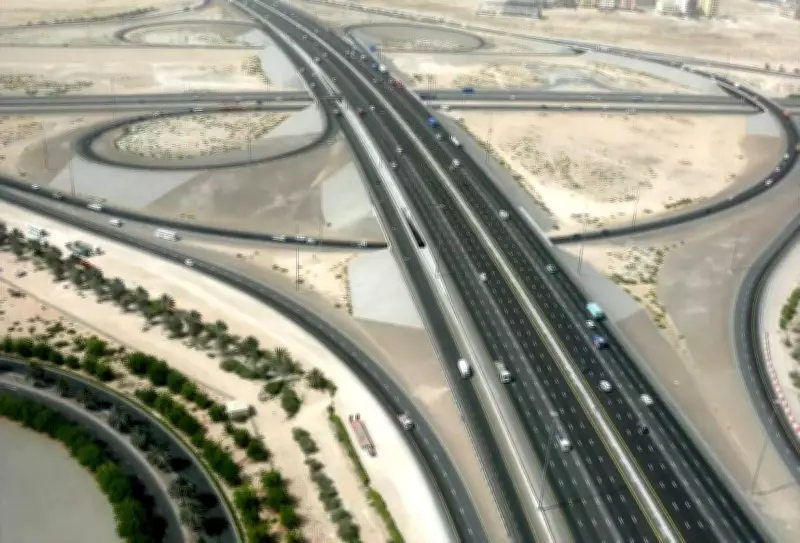
At the heart of this ambitious plan lies a massive Dh6-billion federal highway initiative, frequently dubbed the "Fourth Federal Highway." This project is designed to significantly alleviate pressure on existing infrastructure.

Key features of this new highway include:
- A 68-kilometer-long route connecting Dubai, Sharjah, and Ajman
- Six to eight lanes in each direction to dramatically boost capacity
- Ten major interchanges aimed at reducing bottlenecks
- Four flyovers to enhance traffic flow at critical junctions
This new corridor will integrate with current major highways such as E11, E311, and E611, which are currently under immense strain. Officials highlight that the highway is not solely intended to ease congestion but also to support anticipated population growth and economic expansion across the northern emirates, ensuring long-term viability.
Bus Rapid Transit System: A Shift Towards Public Transport
The strategy does not rely exclusively on road expansion. A pivotal element involves introducing a high-capacity public transport system engineered to move people more efficiently across the three emirates. Authorities have proposed approximately ten major transit routes linking Dubai, Sharjah, and Ajman, supported by dedicated Bus Rapid Transit lanes that enable buses to bypass traffic congestion.
These BRT systems will operate on exclusive corridors, guaranteeing faster and more reliable journeys, akin to a metro system but offering greater flexibility and lower deployment costs. The network is expected to connect seamlessly with metro stations and key urban centers, facilitating smoother transfers for daily commuters. The overarching goal is to diminish reliance on private cars, shorten commute times, and reduce carbon emissions, particularly as vehicle numbers in the UAE continue to escalate.
Beyond Roads and Buses: A Holistic Approach
The proposal was examined during the inaugural 2026 meeting of the UAE Infrastructure and Housing Council, chaired by Energy and Infrastructure Minister Suhail Mohamed Al Mazrouei. Officials stressed that addressing congestion necessitates more than just new road construction.
In addition to infrastructure expansion, authorities are exploring methods to manage vehicle ownership growth while enhancing coordination among various transport modes, including road networks and public transit systems. There is also a pronounced emphasis on long-term sustainable mobility planning, indicating a broader policy shift towards a fully integrated, multi-modal transport ecosystem rather than dependence on road expansion alone.
Implications for Daily Commuters
For the millions of commuters navigating daily between Dubai, Sharjah, and Ajman, the combined effect of these measures could be transformative. Travel times are projected to improve as congestion eases on major routes, while the availability of faster and more reliable public transport may present a viable alternative to driving.
Over time, this could alleviate peak-hour pressure on highways, reduce commuting stress, and render cross-emirate travel more predictable and efficient. Ultimately, the plan embodies a larger endeavor to reimagine intercity mobility, focusing not just on augmenting capacity but on fostering a smarter and more balanced transport system.






