

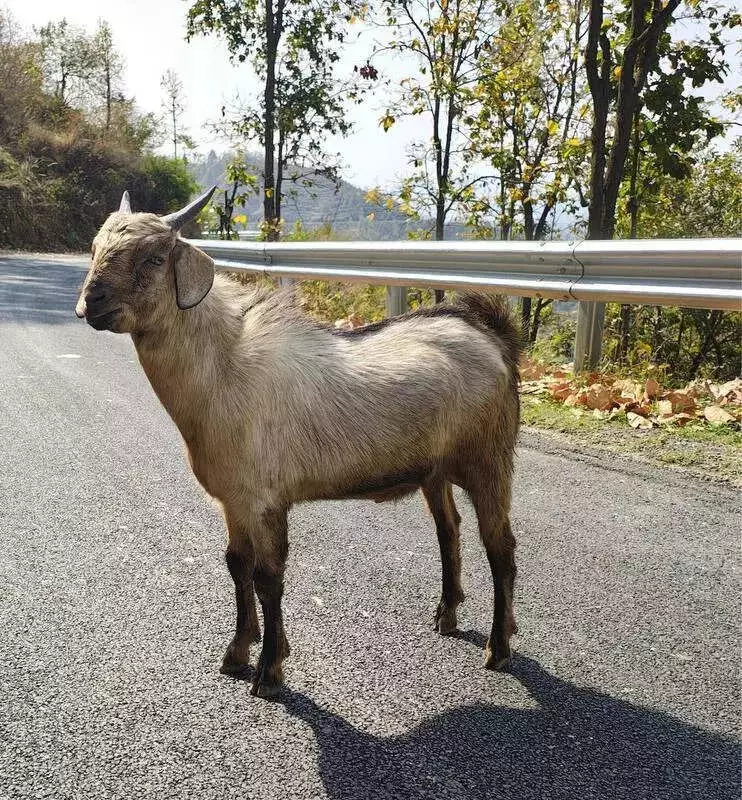
In a significant boost for local livestock conservation, the Udaipuri goat from Uttarakhand has been formally recognised as a distinct indigenous breed by national authorities. This official status is set to unlock targeted support for the breed's preservation and enhancement.
Official Recognition and Its Significance
The National Bureau of Animal Genetic Resources (NBAGR) in Karnal granted the recognition, following approval from the Indian Council of Agricultural Research (ICAR) Breed Registration Committee during its meeting on November 12. The official communication was issued by NH Mohan, director of ICAR-NBAGR.
Professor BN Shahi of GB Pant University of Agriculture and Technology, who was involved in monitoring the breed, highlighted the importance of this step. "Uttarakhand is endowed with a diverse range of indigenous goat genetic resources. This recognition will enhance Udaipuri's productivity through selective breeding, scientific management practices and conservation programmes, thereby promoting sustainable livestock farming in the region," Shahi stated.

Characteristics and Habitat of the Udaipuri Goat
The Udaipuri goat is a medium-sized animal with a tan coat, distinguished by a unique black stripe running along its back. It is reared primarily for meat production. An adult male typically weighs about 26 kg, while females average around 21 kg.
Its native habitat is specifically the Udaipuri and Ajmeri patties, an area stretching from Dugadda to Yamkeshwar in the Pauri Garhwal district of Uttarakhand. With this new registration, Uttarakhand now boasts three officially recognised goat breeds, the other two being the Pantja and Chaugarkha breeds, which were registered earlier by the College of Veterinary and Animal Sciences at GB Pant University in collaboration with ICAR-Indian Veterinary Research Institute (IVRI).
Boosting the Hill Economy and Future Prospects
Officials from the Uttarakhand animal husbandry department emphasised that goats and sheep form the backbone of the hill livestock economy. These animals are crucial for sustaining the livelihoods of small, marginal, and often landless farmers, providing meat, milk, and fibre for both income and food security.
Beyond the recognised breeds, the state is home to other valuable indigenous genetic resources like the Kow Baker (Black Goat) and Kow Debar (Black Sheep). Although currently non-descript, these breeds are well-adapted to the region's challenging climate and terrain. Professor Shahi confirmed that systematic studies to characterise these breeds phenotypically are currently in progress, which could lead to further recognitions.
This formal recognition of the Udaipuri goat paves the way for breed-specific policy formulation, better disease management, and focused conservation efforts, ultimately aiming to strengthen the rural economy and preserve India's rich biodiversity of livestock.






