

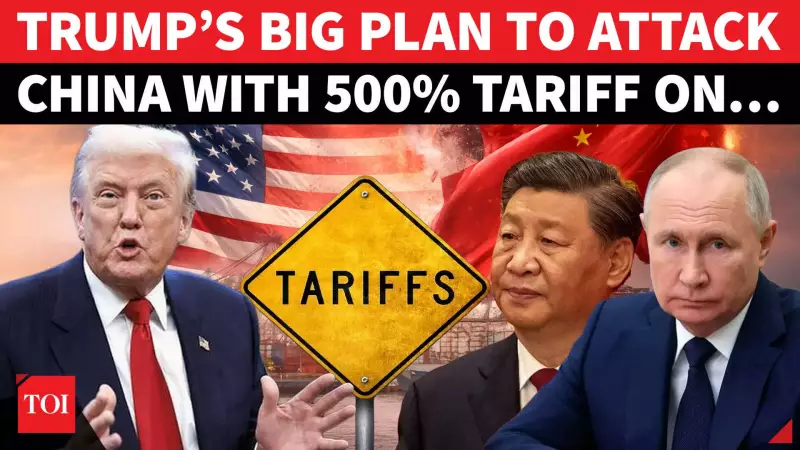
In a move with significant implications for global trade, former US President Donald Trump has thrown his weight behind a contentious bipartisan bill that could authorize tariffs as high as 500% on countries continuing to purchase Russian oil and energy exports. This development, dated January 8, 2026, sets the stage for potential diplomatic and economic friction with major partners, including India.
What is the Graham-Blumenthal Bill?
The proposed legislation, spearheaded by Republican Senator Lindsey Graham with support from Democratic co-sponsors, is designed to strangle the revenue streams believed to be financing Russia's military operations in Ukraine. The strategy explicitly targets nations that have maintained or increased their energy imports from Russia despite Western sanctions. Key economies like India, China, and Brazil are in the crosshairs of this punitive measure.
By endorsing the bill, Trump has aligned himself with a broader US strategic objective: exerting maximum economic pressure on Moscow while gaining substantial leverage over countries dependent on Russian energy. The bill is now progressing toward potential action in the US Senate, where its fate will be closely watched in capitals worldwide.

Direct Impact on India and Global Trade Dynamics
The implications for India are particularly stark. As a major developing economy with significant energy needs, India has increased its purchases of discounted Russian crude following the Ukraine conflict. The threat of 500% tariffs on these imports represents a severe economic shock, potentially disrupting India's energy security and trade calculations.
This move signals a more aggressive and unilateral US approach to foreign policy and trade under a potential future Trump administration. It places allied and partner nations in a difficult position, forcing them to choose between affordable energy and avoiding punitive US trade measures. The bill, if passed, would grant the US executive branch extraordinary authority to impose these crippling tariffs, making it a powerful tool of economic statecraft.
Broader Consequences and Strategic Calculations
The endorsement of the Graham-Blumenthal bill is more than just a policy shift; it is a statement of intent. It reflects a willingness to risk diplomatic fallout with key trading partners to achieve geopolitical goals. For India, this creates a complex diplomatic tightrope, balancing its long-standing strategic partnership with the United States against its pragmatic economic and energy interests.
The global reaction will be critical. China is likely to condemn the move strongly, while other nations in the Global South may view it as economic coercion. The development also raises questions about the future of multilateral trade rules and the increasing use of tariffs as a primary foreign policy instrument. The coming months will reveal whether this bill becomes law and how nations like India craft their response to this formidable economic challenge.






