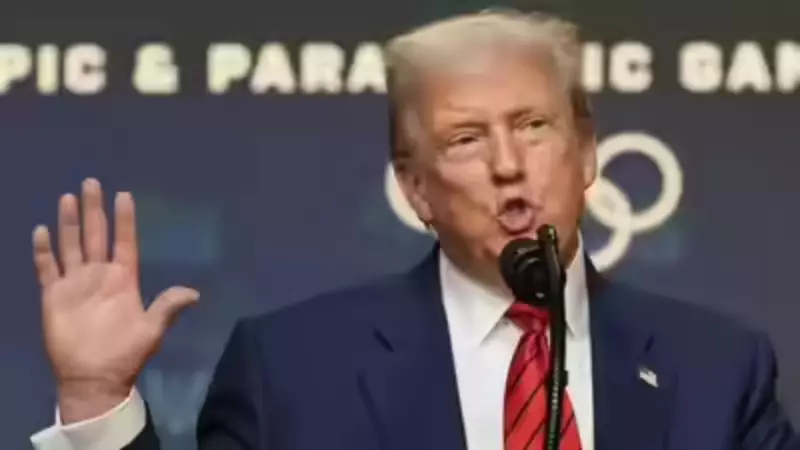
A new legislative move in the United States, approved by President Donald Trump, has sent shockwaves through global energy markets, with India firmly in its crosshairs. The bill authorizes staggering tariffs of up to 500% on countries that import petroleum from Russia, a measure seen as a direct threat not only to China and India but also to the European Union.
Russia's Fossil Fuel Windfall and Key Importers
According to a detailed analysis by the Centre for Research on Energy and Clean Air (CREA), Russia's revenue from fossil fuel exports since the onset of the Ukraine conflict in February 2022 has been monumental. The country has earned an estimated 1,002 billion euros (approximately $1.2 trillion). The breakdown shows that oil constituted 68% of these earnings, followed by gas (over 20%) and coal (over 10%).
During this period, China emerged as the largest importer of Russian oil, with purchases surpassing 210 billion euros (around $245 billion). India secured the second spot, spending a substantial $168 billion. The European Union followed closely with imports worth $125 billion. In terms of total fossil fuel spending, China's cumulative outlay reached nearly 294 billion euros ($343 billion), while India spent over 162 billion euros ($190 billion) on oil and coal combined.

Recent Trends and the Looming US Pressure
CREA's monthly tracking reveals interesting shifts. In November, China's crude oil imports from Russia dipped to 3.1 billion euros from 3.7 billion euros in October. Conversely, India's imports saw a marginal increase, rising to 2.6 billion euros in November from 2.5 billion euros the previous month.
The international community is now keenly observing President Trump's next steps. Many analysts interpret the US action as a strategic move to exert fresh pressure on Russia, aiming to bring it to the negotiating table on terms favorable to Washington.
Expert View and India's Strategic Stance
Energy policy and geopolitics expert Narendra Taneja offered a crucial perspective, noting that the bill has only been passed by the US Congress and its implementation by the administration is not guaranteed. "We should wait and watch," Taneja advised, highlighting the uncertainty surrounding the policy's enforcement.
So far, India has maintained a firm focus on its commercial and energy security interests. While Russia's share in the Indian oil basket has decreased from previous highs, it continues to be the single largest source of crude oil for the country. However, with key Russian suppliers like Lukoil and Rosneft facing sanctions, Indian purchases from Russia are anticipated to moderate in the coming months, adding another layer of complexity to the global energy chessboard.