US Ambassador Declares India's Semiconductor Role 'Essential' in Global Supply Chain
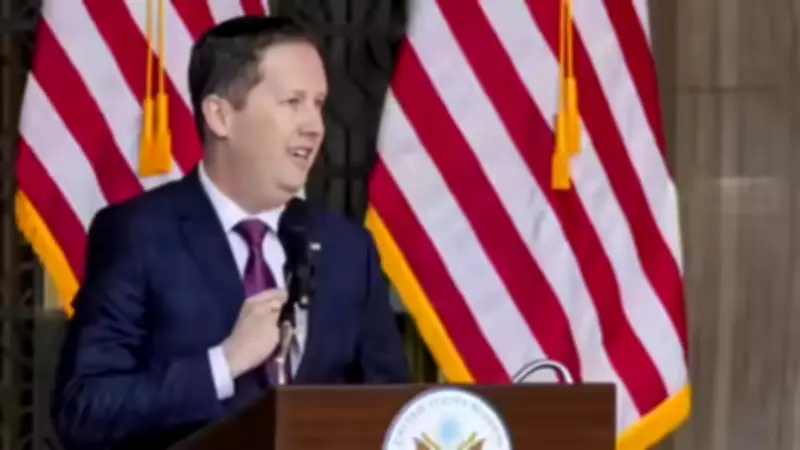
US Ambassador to India Sergio Gor has highlighted India's indispensable position in the global semiconductor supply chain, describing it as a secure and reliable alternative amid aggressive regional competition. Speaking at the inauguration of Micron Technology's semiconductor facility in Sanand, Gujarat, on Saturday, Gor emphasized the strategic importance of India's contributions under Prime Minister Narendra Modi's leadership.
India as a Secure Alternative in a Sensitive Sector
Ambassador Gor stated that India's role is not merely welcome but essential, particularly as neighboring countries expand production of legacy chips and seek to dominate the sector. "India offers the secure and reliable alternative," he said, according to PTI reports. This declaration came during the event where Prime Minister Modi inaugurated the US-based company's ATMP (Assembly, Testing, Marking and Packaging) plant, underscoring the growing bilateral cooperation.
Gor described semiconductors as the backbone of modern technology, powering everything from smartphones and defense systems to artificial intelligence and autonomous vehicles. He stressed that building resilient supply chains for such critical components requires semiconductor ecosystems at multiple trusted locations, positioning India as a key player in this global framework.

Micron's Investment: A Strategic Milestone
The ambassador termed Micron's $2.75 billion investment a strategic milestone, representing more than just a new factory. "It represents the future of American technology leadership, the strength of the US-India partnership, and our shared commitment to building a resilient supply chain that serves both our nations and the world," Gor elaborated. He noted that India currently has 10 semiconductor projects worth $19 billion under development, calling them a direct testament to Prime Minister Modi's vision and ability to secure India's future and that of global partners, including the US.
Bilateral Cooperation and Future Prospects
Referring to growing bilateral ties, Gor mentioned the U.S.-India COMPACT (Catalyzing Opportunities for Military Partnership, Accelerated Commerce & Technology) launched during Prime Minister Modi and President Donald Trump's meeting in Washington last February. At the heart of this framework is the TRUST initiative—transforming the relationship utilizing strategic technology. "Today's inauguration embodies that vision," he said.
Gor added that India's focus on chip design and ATMP operations complements America's push to manufacture the most advanced chips. He praised the Gujarat government's incentive policies for semiconductor projects, setting an example for other states. The US is "beyond proud" of Micron's Sanand facility, and other American companies are closely watching and exploring opportunities in Gujarat, he noted.
Under Trump's leadership, the US is strengthening its semiconductor capacity, with Micron's $100 billion multi-fab facility in Clay, New York, being the largest in US history. "We are investing in advanced chip manufacturing at home while building trusted partnership abroad. But American leadership isn't about doing it alone. It's about working with our partners who share common goals and our vision for secure, prosperous future," Gor emphasized.
Prime Minister Modi's Remarks and Global Initiatives
Earlier, Prime Minister Modi described the Micron plant as a testament to India–US collaboration. He also referred to the Pax Silica agreement between the two countries, stating that collective efforts will make the global supply chain of critical minerals more secure and reliable. On February 20, India officially joined the Pax Silica initiative, a US-led international coalition aimed at securing global supply chains for artificial intelligence, semiconductors, and critical minerals.
This development marks a significant step in India's integration into the global semiconductor ecosystem, positioning it as a trusted partner in an era of increasing technological competition and supply chain vulnerabilities.