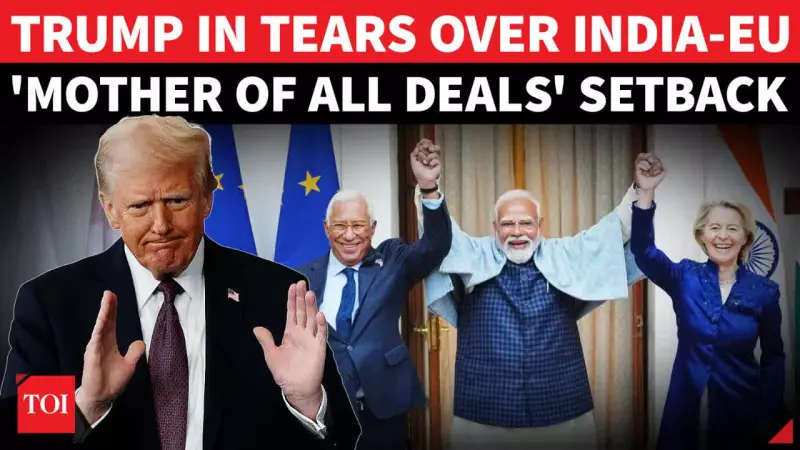
In a significant development that has sparked international trade tensions, India and the European Union have officially sealed a landmark trade agreement, described by leaders as the "mother of all trade deals." This pact, which has been in negotiation for several years, promises to dramatically reduce duties on the majority of European exports to India, potentially reshaping global supply chains and boosting economic ties between the two regions.
U.S. Reaction: Sharp Displeasure and Accusations
The announcement of this deal has not been well-received in Washington, where the Trump administration has voiced strong opposition. U.S. Treasury Secretary Scott Bessent has publicly criticized the agreement, expressing frustration that Europe has chosen to strike a pact with India even as the United States has imposed steep tariffs on New Delhi. These tariffs were levied in response to India's purchases of Russian oil, a move that has already strained U.S.-India relations.
Bessent's Remarks Highlight Trade Rivalries
Bessent's comments underscore the growing trade rivalries and geopolitical tensions in the current global landscape. He reportedly questioned the timing and implications of the India-EU deal, suggesting that it undermines U.S. efforts to enforce economic policies related to international conflicts. This backlash from the U.S. highlights the complex interplay between trade agreements and foreign policy objectives, with nations often balancing economic interests against strategic alliances.

Implications for Global Trade Dynamics
The India-EU trade deal is expected to have far-reaching consequences for global trade dynamics. By slashing tariffs, it could encourage increased European investment in India, foster innovation, and create new job opportunities in both regions. However, the U.S. opposition adds a layer of uncertainty, potentially leading to retaliatory measures or further escalations in trade disputes. This situation reflects the broader challenges in achieving multilateral trade harmony amid competing national interests.
Broader Context of International Relations
This development occurs against a backdrop of other international tensions, as indicated by related news headlines. For instance, issues such as U.S. warnings to China's allies, conflicts in the Middle East, and domestic incidents in the U.S. all contribute to a volatile global environment. The India-EU deal, therefore, is not just an economic milestone but also a diplomatic maneuver that could influence future trade negotiations and geopolitical alignments.
As the world watches, the fallout from this agreement will likely continue to unfold, with stakeholders from various sectors monitoring its impact on markets, policies, and international relations. The U.S. response, spearheaded by figures like Scott Bessent, signals that trade wars and diplomatic spats are far from over, making this a critical moment for global economic governance.