

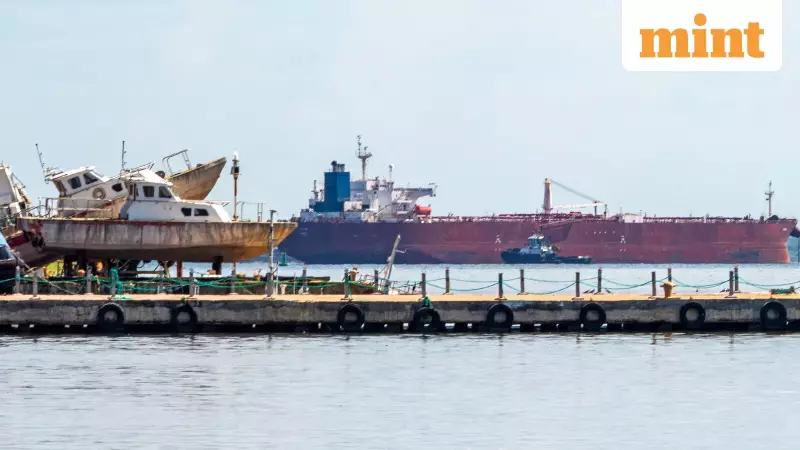
In a significant escalation of its pressure campaign, the United States has launched a new legal offensive targeting a shadowy network of oil tankers that supply sanctioned crude to nations like Venezuela, Iran, and Russia. This strategy, spearheaded by the Justice Department, aims to cripple the global black market for oil by physically seizing vessels that form the so-called "ghost fleet."
The Hunt for the Ghost Fleet
The fresh approach was visibly demonstrated in recent days with the US Coast Guard's pursuit of the Bella 1, a sanctioned oil tanker whose crew refused to allow boarding on Sunday, December 22, 2024. This vessel is the third to be targeted after the US took control of two other Very Large Crude Carriers (VLCCs), the Skipper and the Centuries.
According to analysts at shipping data firm Kpler, while the Skipper and Centuries were laden with nearly 2 million barrels of Venezuelan crude when seized, the Bella 1 was likely empty during the pursuit. Intriguingly, data shows the Bella 1 initially turned away from Venezuela after the Skipper's seizure on December 10, only to later change course back toward the South American nation.

Justice Department officials confirm this marks a strategic shift. While the US has previously targeted sanctioned oil, the focus is now intensifying on confiscating the ships themselves that serve the illicit global oil trade.
The Legal Engine Behind the Seizures
Driving this aggressive campaign is a specialized team known as the Threat Finance Unit, operating under the National Security Section of the US Attorney's Office for the District of Columbia. US Attorney Jeanine Pirro stated that the unit's expertise and jurisdictional advantages are key to these operations.
"Under President Trump's strong leadership, we dramatically have increased the pace and volume of these operations to make the world a safer place," Pirro said in a statement. Officials revealed that with current resources dedicated to tracking tankers, the unit can compile the necessary evidence for a seizure warrant in a matter of weeks.
The legal basis for these actions hinges on international maritime law. Former Coast Guard chief counsel William Baumgartner explained that under the United Nations Convention on the Law of the Sea, specially trained Coast Guard teams have the right to board and search vessels suspected of violating US law. Ships deemed "stateless" or flying a false flag are particularly vulnerable to US jurisdiction.
Videos released by Attorney General Pam Bondi and Homeland Security Secretary Kristi Noem depict the dramatic takedowns, with personnel fast-roping from helicopters onto tanker decks, underscoring the law-enforcement nature of the operations.
Global Repercussions and Venezuelan Defiance
The consequences of this crackdown extend far beyond a single nation. The US seizures threaten to dramatically reduce the flow of Venezuelan crude, which is the financial lifeblood of Nicolás Maduro's regime. Analysts estimate that about 70% of Venezuela's oil exports depend on the sanctioned fleet now being targeted.
Furthermore, the disruption could cause significant shortages for other countries reliant on this shadowy network, including Cuba, Iran, Russia, and China. President Trump emphasized the scale of the operation, telling reporters on Monday, December 23, that the US has formed a "massive armada" in South America and plans to keep both the seized oil and the ships.
The Venezuelan government has responded with fury, labeling the US actions as "blatant theft" and an "act of international piracy." It accuses President Trump of seeking to plunder the country's energy resources, defiantly insisting that its crude exports have not been impacted—a claim directly challenged by the ongoing seizures and the new blockade order against sanctioned tankers entering or leaving Venezuelan waters.
As more US warrants are processed, the global oil black market faces unprecedented pressure, marking a bold and contentious new chapter in geopolitical energy warfare.






