

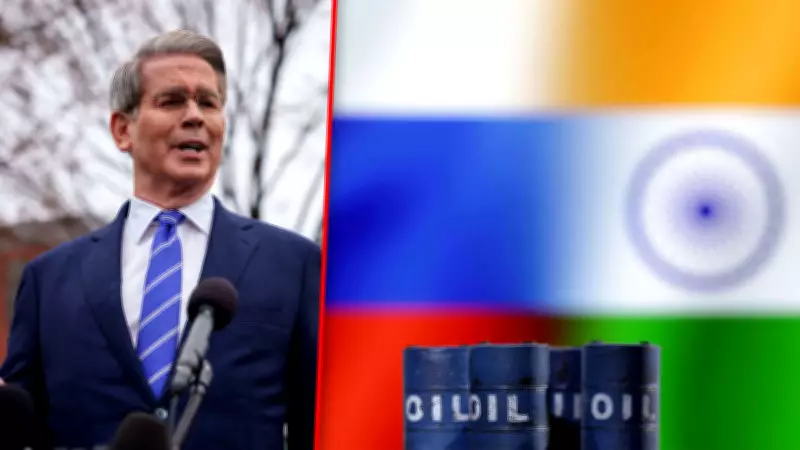
US Halts Russian Oil Waivers, India's Energy Strategy Under Scrutiny
The United States has made a decisive policy shift by announcing it will not renew sanctions waivers that previously permitted countries, including India, to purchase Russian oil. This move, confirmed by US Treasury Secretary Scott Bessent, is aimed at intensifying financial pressure on Moscow, marking a significant escalation in economic measures against Russia.
Impact on India's Oil Sourcing and Energy Security
India, which had significantly benefited from accessing discounted Russian crude under these waivers, now faces immediate pressure to reassess its oil sourcing strategy. The end of the waiver system threatens to disrupt India's energy imports, potentially leading to increased costs and supply chain adjustments as the nation seeks alternative suppliers to meet its substantial domestic demand.
US Treasury Secretary Scott Bessent emphasized that this decision reflects Washington's firm commitment to tightening the economic noose around Russia, despite appeals from several Asian nations to extend the relief measures. The original waivers were implemented to help stabilize global oil markets during periods of heightened geopolitical tension, but critics have long argued that they diluted the overall effectiveness of sanctions on Russia's economy.

Global and Regional Repercussions of the Policy Change
The termination of these waivers is expected to have far-reaching consequences beyond India, affecting global oil trade dynamics and regional energy security. Asian countries that relied on Russian oil imports may now need to negotiate new agreements or turn to other producers, potentially increasing competition and volatility in international crude markets.
This development underscores the complex interplay between geopolitical strategies and economic realities, as nations balance domestic energy needs with international diplomatic pressures. India's response to this new challenge will be closely watched, as it navigates the delicate task of securing affordable oil while maintaining its foreign policy stance.






