US Trade Chief Reverses Position on India-EU Trade Agreement
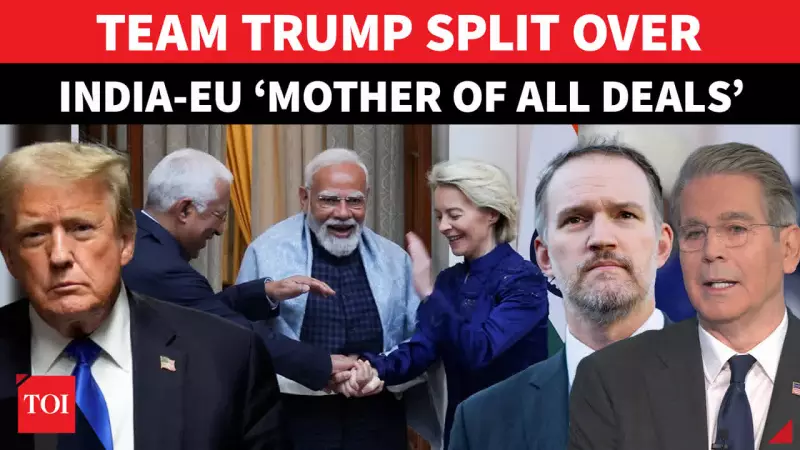
In a remarkable diplomatic pivot, Washington's trade leadership has completely reversed its stance on the landmark India-European Union trade agreement. Just one day after issuing sharp criticism of Europe for expanding commercial ties with New Delhi, senior United States officials are now praising India's strategic gains from what they're calling the "mother of all trade deals."
From Criticism to Commendation: A Dramatic Shift
The sudden change in Washington's position represents a significant development in global trade diplomacy. Senior U.S. trade representatives who previously expressed concerns about the India-EU partnership are now openly acknowledging that India has emerged as the clear winner in this comprehensive trade arrangement. This reversal highlights the complex dynamics of international trade negotiations in today's multipolar world economy.
Reshaping Global Trade Equations
The India-EU trade deal is fundamentally reshaping global trade equations across multiple continents. From diplomatic circles in Delhi to policy discussions in Washington and Brussels, this agreement is creating new economic alignments that expose the intense competition among major global powers. The deal's implications extend far beyond simple tariff reductions, touching upon strategic economic positioning and geopolitical influence.

Perhaps the most significant revelation from this diplomatic shift is the clear recognition of India's growing economic leverage in a fractured global economy. U.S. officials now admit that New Delhi has skillfully positioned itself to benefit substantially from this agreement, gaining access to European markets while strengthening its own economic foundations. This acknowledgment marks a watershed moment in how major powers perceive India's role in international trade architecture.
Competition Among Global Powers Intensifies
The evolving U.S. position on the India-EU deal underscores the intensifying competition among the world's major economic powers. As traditional alliances shift and new partnerships form, countries are increasingly maneuvering to secure favorable trade positions. The initial U.S. criticism followed by praise reveals the complex calculations happening behind closed doors in global trade negotiations.
Strategic Implications for Global TradeThis development carries profound implications for future trade agreements worldwide. The recognition of India's successful negotiation strategy may influence how other nations approach trade deals with both India and the European Union. Furthermore, it demonstrates how rapidly positions can change in response to evolving economic realities and strategic considerations.
A New Era of Economic Diplomacy
The Washington reversal signals a new era in economic diplomacy where traditional alliances are being tested and redefined. As India strengthens its trade relationships with Europe while navigating its complex partnership with the United States, the global economic landscape continues to evolve in unpredictable ways. This episode serves as a powerful reminder of how quickly trade positions can transform in response to changing geopolitical and economic circumstances.