

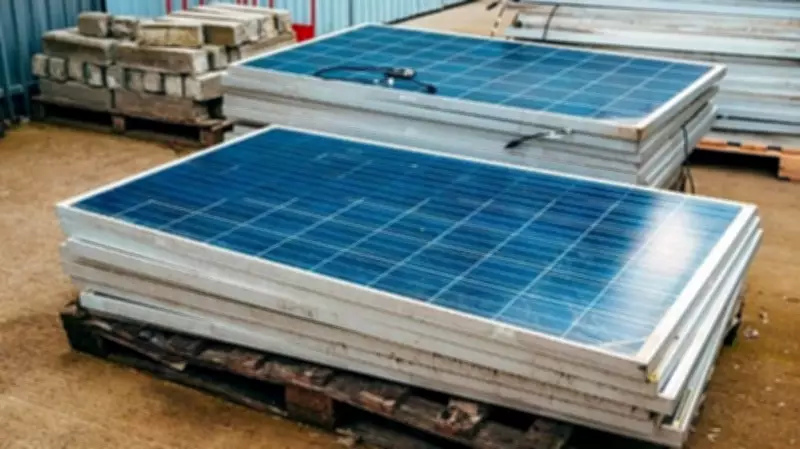
US Imposes Hefty 125.87% Preliminary Duty on Indian Solar Imports
The United States has taken a significant trade action by announcing a preliminary countervailing duty of 125.87% on imports of certain solar goods from India. This decision, detailed in a recent US order, comes as a response to what US authorities describe as unfair subsidies provided to Indian solar manufacturers, which they claim distort the market and harm domestic producers.
Dramatic Surge in Solar Imports from India to the US
The imposition of this duty follows a remarkable and rapid increase in solar product imports from India into the United States. According to the official US order, these imports skyrocketed to USD 792.6 million in 2024, a staggering jump from just USD 83.86 million recorded in 2022. This represents an increase of over 845% in just two years, highlighting the growing trade volume in the renewable energy sector between the two nations.
Key Details of the US Trade Action:

- Duty Rate: The preliminary countervailing duty is set at 125.87%, which is notably high and intended to offset alleged subsidies.
- Targeted Goods: The duty applies specifically to certain solar products, though the exact types have not been detailed in the initial announcement.
- Timing: The announcement was made on February 25, 2026, as per the US order, indicating ongoing trade investigations.
Implications for India-US Trade Relations
This move by the US is likely to have substantial implications for bilateral trade relations, particularly in the critical renewable energy sector. India has been actively promoting its solar manufacturing capabilities under initiatives like the Production Linked Incentive (PLI) scheme, which may be scrutinized under US trade laws. The high duty could potentially slow down the export momentum that Indian solar companies have recently gained in the US market.
Potential Impacts:
- Trade Volume: The duty may lead to a reduction in solar imports from India, affecting the USD 792.6 million trade figure recorded in 2024.
- Market Dynamics: Indian manufacturers might need to reassess their export strategies and pricing to remain competitive in the US market.
- Diplomatic Talks: This could spur further discussions between Indian and US trade officials to address subsidy concerns and seek a resolution.
As the situation develops, stakeholders in both countries will be closely monitoring the final determination of this duty and its long-term effects on the global solar energy trade landscape.






