

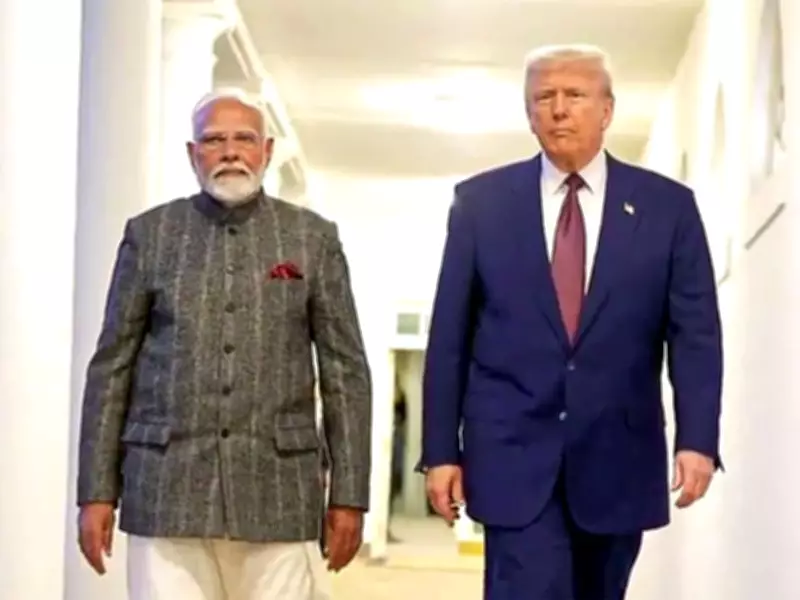
US and India Forge Path with Interim Trade Deal Framework
The United States and India have jointly announced a comprehensive framework for an Interim Agreement on reciprocal and mutually beneficial trade, marking a pivotal advancement in their economic partnership. This development is a significant step toward the broader US-India Bilateral Trade Agreement (BTA) negotiations, which were initiated by President Donald Trump and Prime Minister Narendra Modi in February 2025, as detailed in a statement released by the White House and India's Commerce Ministry.
Historic Milestone in Bilateral Relations
According to the joint statement, the Interim Agreement represents a historic milestone in the partnership between the two nations. It underscores a shared commitment to fostering reciprocal and balanced trade, grounded in mutual interests and tangible outcomes. This framework is designed to pave the way for enhanced economic collaboration and deeper ties.
Key Tariff Reductions and Market Access Provisions
As part of the framework, India has agreed to eliminate or reduce tariffs on all US industrial goods, along with a wide array of US food and agricultural products. This includes items such as dried distillers' grains, red sorghum for animal feed, tree nuts, fresh and processed fruits, soybean oil, wine, and spirits. In a reciprocal move, the United States will apply an 18 per cent tariff on Indian-origin goods under a relevant executive order, covering sectors like textiles and apparel, leather and footwear, plastics and rubber, organic chemicals, home decor, artisanal products, and certain machinery.

Upon successful conclusion of the Interim Agreement, the US will remove these reciprocal tariffs on a broad range of goods, including generic pharmaceuticals, gems and diamonds, and aircraft parts. Additionally, the framework provides for the removal of US tariffs on specific Indian aircraft and aircraft parts that were previously imposed under national security-related proclamations concerning aluminium, steel, and copper.
Addressing Non-Tariff Barriers and Enhancing Cooperation
The agreement also focuses on tackling non-tariff barriers that have hindered bilateral trade. India has committed to taking steps to address long-standing obstacles in areas such as US medical devices, information and communication technology goods, and food and agricultural products. Furthermore, India will review the acceptance of US-developed or international standards in identified sectors within six months of the agreement's entry into force.
Both countries have pledged to enhance cooperation on standards and conformity assessment procedures to streamline compliance and allow for modifications to commitments in response to changes in agreed tariffs. They also aim to provide each other with preferential market access in sectors of mutual interest on a sustained basis and establish rules of origin to ensure that the benefits of the agreement primarily accrue to the United States and India.
Broader Economic and Security Alignment
Beyond the Interim Agreement, the framework outlines plans for strengthened economic security alignment. This includes cooperation on supply chain resilience, investment reviews, export controls, and addressing non-market policies of third parties. As part of this broader engagement, India has expressed its intention to purchase USD 500 billion worth of US energy products, aircraft and aircraft parts, precious metals, technology products, and coking coal over the next five years.
The two sides have agreed to significantly increase trade in technology products, such as graphics processing units used in data centres, and expand joint technology cooperation. They also committed to addressing barriers to digital trade and establishing a pathway for robust, mutually beneficial digital trade rules under the BTA.
Future Steps and Comprehensive BTA Goals
Both nations have affirmed their commitment to promptly implement the framework and work toward finalising the Interim Agreement. This effort is viewed as a stepping stone to concluding a comprehensive and mutually beneficial Bilateral Trade Agreement in line with the agreed roadmap. The US has indicated it will consider India's request to continue efforts to lower tariffs on Indian goods during the ongoing BTA negotiations.

This framework not only aims to boost trade volumes but also reinforces the strategic partnership between the US and India, setting a precedent for future economic collaborations on the global stage.





