

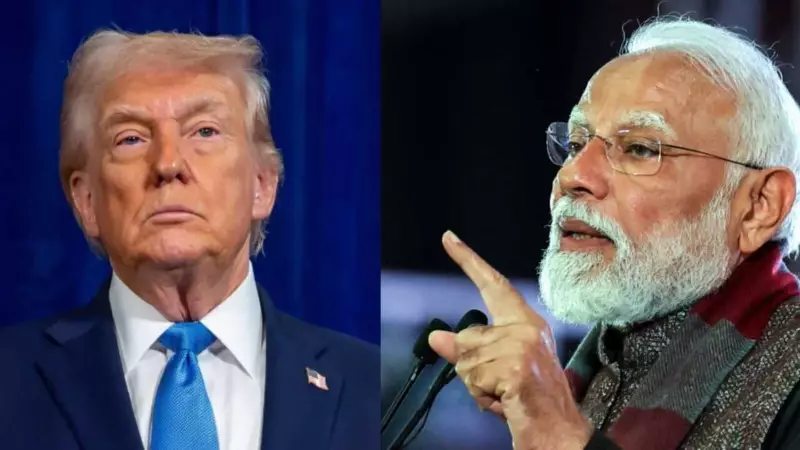
A senior United States official has made a significant clarification regarding recent speculation about a potential US-India trade deal, directly refuting claims of a high-level conversation between the two nations' leaders. The statement also included a pointed metaphor about the current state of trade relations.
No Phone Call Between Modi and Trump, Says US Official
Marcela Escobari, the Assistant Secretary of State for the Bureau of Western Hemisphere Affairs, publicly stated that Prime Minister Narendra Modi did not call former President Donald Trump to discuss a bilateral trade agreement. This clarification came during a public briefing, effectively dismissing rumors or reports that suggested such direct communication had taken place to break the deadlock in trade talks.
The official emphasized that while the US values its strategic partnership with India, the trade negotiations are complex and handled through established diplomatic and bureaucratic channels. The denial of a leader-level call underscores that the process remains at the official level, without the top-level political intervention that some observers had anticipated.

India on the 'Wrong Side of the Seesaw': A Stark Assessment
More strikingly, the US official used a vivid analogy to describe the perceived imbalance in trade relations. It was stated that, from the American perspective, India is currently on the "wrong side of the seesaw." This metaphor suggests that the United States believes the benefits of the current trade relationship are disproportionately tilted, with India gaining more advantage, leaving the US in a less favorable position.
This candid assessment highlights the core American grievances that have stalled a comprehensive trade deal. Key sticking points, as per previous negotiations, include:
- Market Access: US demands for greater entry into India's agricultural (dairy, poultry) and digital markets.
- Price Controls: American concerns over India's policies on medical device pricing and data localization.
- Tariffs: US objections to India's tariffs on high-value products like electronics, motorcycles, and alcoholic beverages.
The "seesaw" comment is one of the most direct public characterizations by a US official in recent times, indicating a firm stance that India must make more concessions to rebalance the relationship.
Context and Implications for Bilateral Relations
This development occurs amidst a broader context of the United States strengthening its economic and strategic ties in the Indo-Pacific region, with India being a pivotal partner. The trade tensions, however, present a persistent challenge. The statement serves multiple purposes: it manages expectations by quashing rumors of a quick political fix, and it publicly reinforces the US negotiation position to encourage movement from the Indian side.
For India, the comments present a diplomatic and economic challenge. While the strategic and defense partnership with the US has deepened significantly, trade remains a thorny issue. The Indian government has to balance the desire for a deal that would boost exports and strengthen ties with the need to protect domestic industries, farmers, and its policy sovereignty on digital and healthcare matters.
The public nature of the "wrong side of the seesaw" remark may prompt a reassessment of strategy in New Delhi. It signals that the US trade apparatus, regardless of the administration's overall friendly posture towards India, views the economic terms as unsatisfactory and is willing to state so openly to apply pressure.
The path forward for a US-India trade deal appears to remain arduous. The denial of a Modi-Trump call suggests breakthrough negotiations are not imminent at the highest political level. Any resolution will likely require sustained, technical discussions between trade officials to find compromises on the long-standing issues. The success of the broader strategic partnership may, in the long run, hinge on finding a way to balance this economic seesaw to mutual satisfaction.






