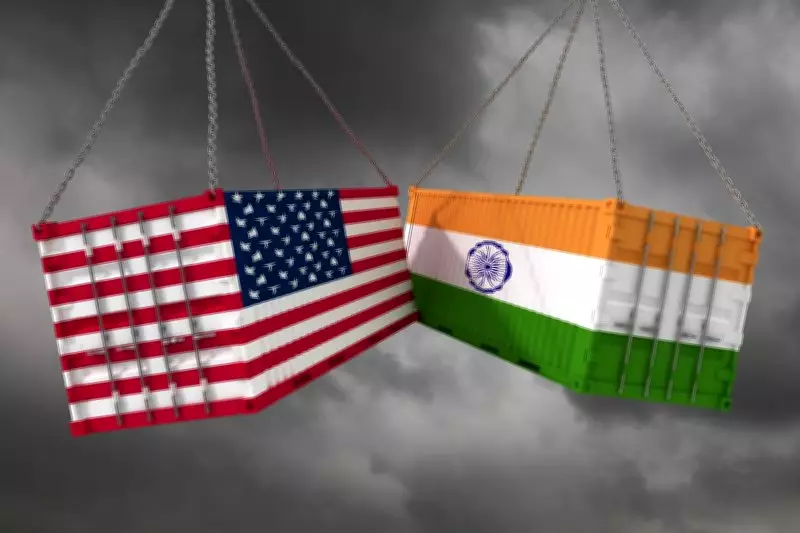
The United States has proposed a 12.5 percent tariff on imports from India, along with China, the United Kingdom, and Japan, following a trade investigation under Section 301 of the Trade Act of 1974. The U.S. Trade Representative (USTR) determined that these countries have failed to enforce legal restrictions on goods produced wholly or partly with forced labour.
Background of the Investigation
The action comes after the USTR initiated investigations into 60 countries for allegedly not enacting or effectively enforcing bans on imports made with forced labour. USTR Ambassador Jamieson Greer stated, "The failure of our most important trading partners to address the importation of goods made with forced labour is unacceptable. This creates a dynamic where American workers are forced to compete globally on an unlevelled playing field. We will no longer tolerate this disparity."
Differential Tariff Rates
For six other nations—Pakistan, Canada, Ecuador, the European Union, Indonesia, and Mexico—the USTR has proposed a lower tariff rate of 10 percent. The USTR noted that these countries have demonstrated a commitment to addressing forced labour imports and have pledged to impose and enforce a prohibition through a formal Agreement on Reciprocal Trade (ART) with the United States.

India's Response
India's Commerce Ministry issued a statement confirming that India remains engaged with the United States on this matter as part of the Section 301 proceedings. Additionally, India is simultaneously working with the U.S. to finalize a framework agreement announced on February 2, in line with the joint statement released on February 7.
The ministry emphasized that the proposed tariffs are not yet final. Stakeholders can submit requests to participate in public hearings by June 22, and written comments can be submitted until July 6. Public hearings are scheduled for July 7. The USTR will consider all comments and testimony before making a final decision on the proposed measures.
Exclusions and Special Mechanisms
Products already covered under Section 232 tariffs and certain other products are excluded from these tariff proposals. A special mechanism has been proposed for textile and apparel products, allowing a certain volume of imports from selected economies to enter the U.S. at lower tariff rates.
Understanding Section 301
Section 301 of the Trade Act of 1974 is designed to address unfair foreign acts, policies, or practices that affect U.S. commerce. It can be used to respond to unjustifiable, unreasonable, or discriminatory foreign government actions that burden or restrict U.S. commerce. Under Section 302(b), the Trade Representative may self-initiate an investigation.
On March 12, 2026, the USTR initiated 60 investigations into various economies for failing to impose and effectively enforce prohibitions on imports produced with forced labour. Pursuant to Section 304(b)(1)(A), the USTR provided opportunities for public comment and held hearings, receiving testimony from nearly 60 witnesses and over 500 comments and rebuttals.