

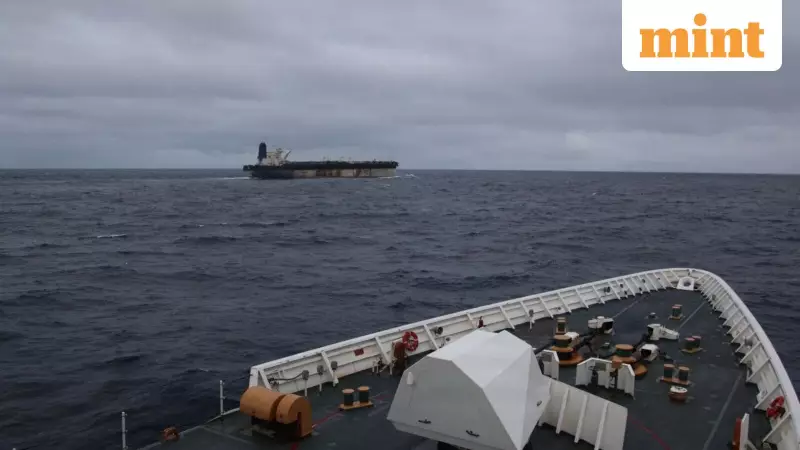
In a dramatic escalation at sea, the United States has seized a fifth oil tanker, directly challenging vessels in the so-called 'shadow fleet' that are now rapidly hoisting the Russian flag in a bid for protection. This move has created a significant new flashpoint between Washington and Moscow, as the U.S. enforces a strict quarantine on tankers moving sanctioned crude to and from Venezuela.
The Flag-Switching Strategy Backfires
The recent seizures underscore a desperate tactic by operators of the shadow fleet. According to data from Lloyd’s List Intelligence, more than 15 tankers involved in shipping sanctioned oil have swapped their flags to fly Russia's tricolor in just the past two weeks. This surge followed the Trump administration's intensified efforts to blockade Venezuela's crude exports.
Richard Meade, editor in chief of Lloyd’s List, explained the reasoning: "Adopting the Russian flag is a way for the dark fleet to be supposedly protected from raids. It can certainly become a flashpoint between Washington and Moscow." The belief was that the U.S. would hesitate to intercept vessels claimed by a major naval power like Russia.

However, this strategy has not yielded safety. American officials confirmed the seizure of a fifth tanker on Friday and continue to monitor others attempting to evade the quarantine. Data from S&P Global Market Intelligence reveals a sharp rise in reflagging, with 25 tankers switching to the Russian flag in the final quarter of 2025, 18 of them in December alone. Notably, 16 of these were already sanctioned by the U.K. or the U.S.
The Case of the Bella 1: A Failed Gambit
The seizure of the tanker Bella 1 perfectly illustrates the high-stakes confrontation. While being tracked by the U.S. military across the Atlantic, the vessel's crew hastily painted a Russian flag on its hull. Moscow even sent ships to escort it, asserting that the tanker had received permission to fly its flag in late December and was sailing toward Russia.
Despite these claims, U.S. special-operations forces seized the vessel in a raid on Wednesday. The tanker was found to be empty of oil. White House press secretary Karoline Leavitt declared the vessel was "deemed stateless after flying a false flag." The U.S. had sanctioned the ship back in 2024, alleging it carried oil for Hezbollah.
According to a senior Russian maritime official, Russian military vessels were in communication with the Bella 1's crew during the capture but ultimately pulled back, radioing their headquarters to express fears of a shootout. The crew did not resist. The Russian Foreign Ministry later stated that two Russian crew members would be released under an agreement with the U.S., with American officials confirming all seized crews would eventually be repatriated.
Broader Implications and the Shadow Fleet's Evolution
This confrontation highlights the deep ties between Venezuela's state oil company, PdVSA, and Russia. Moscow has played a central role in assembling the shadow tanker fleet, which expanded significantly to handle Russian oil exports after sanctions were imposed following the 2022 invasion of Ukraine.
Michelle Wiese Bockmann of Windward noted, "Russian interests may be embedded in PdVSA, potentially setting Trump up for confrontation with [Russian President Vladimir Putin] over oil assets in Venezuela."
The shadow fleet has evolved through various tactics to avoid detection:
- Changing vessel names and falsifying coordinates.
- Sailing under obscure or bogus flags from countries like Gabon, East Timor, and Malawi.
- Now, adopting the flag of a nation with a powerful navy.
The legitimacy of these mid-voyage flag changes under international maritime law remains unclear. While flag states are not obligated to protect registered ships under attack, nations with large navies like Russia often do. This precedent was seen in May when Estonia accused Moscow of sending a jet fighter into NATO airspace as the Baltic country tried to stop a sanctioned, unflagged tanker.

The proliferation of these tactics has raised serious concerns about maritime safety involving older tankers carrying sanctioned cargoes. However, until the recent aggressive seizures, Western governments had largely allowed them to sail unimpeded. The U.S. actions mark a decisive and risky new phase in the global enforcement of oil sanctions, directly testing Russian resolve on the high seas.





