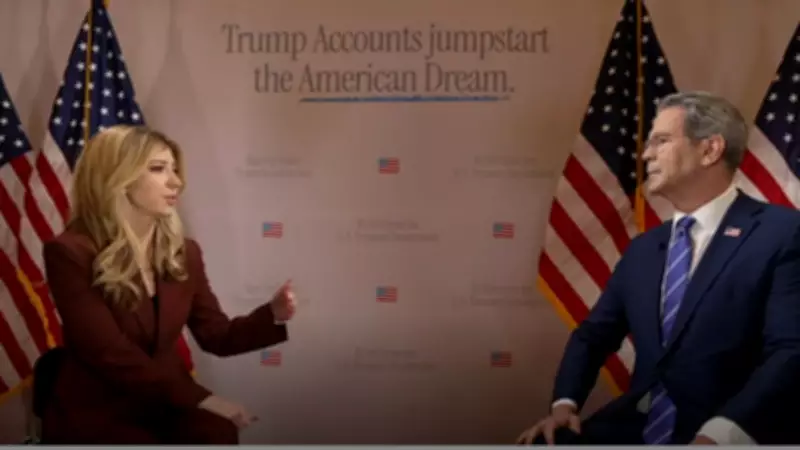
US Treasury Secretary Slams EU Over India Trade Deal, Accuses Europe of Prioritizing Commerce Over Ukraine Peace
In a sharp critique of European foreign policy, US Treasury Secretary Scott Bessent has publicly denounced the European Union's decision to sign a Free Trade Agreement (FTA) with India, framing it as a choice that places commercial interests above humanitarian concerns in Ukraine.
His remarks, delivered during an interview with CNBC, came just days after India and the European Union finalized what has been widely described as the "mother of all deals" on Tuesday, marking a significant milestone in global trade relations.
Bessent's Accusation: Europe Indirectly Funds Ukraine War
Bessent expressed deep disappointment with European nations, accusing them of indirectly financing the very conflict in Ukraine that they publicly condemn. "India started buying sanctioned Russian oil and guess who's buying the refined products. The Europeans, so they are funding the war against themselves," he stated emphatically.

He characterized this situation as something "you couldn't have made up," highlighting the perceived hypocrisy in Europe's actions. The Treasury Secretary contrasted this with the US response, noting that Washington had imposed a 25 percent tariff on India for purchasing Russian oil—a measure that European countries chose not to support.
Trade Deal Details and Strategic Implications
The India-EU FTA, signed earlier this week, includes comprehensive agreements on:
- Security and defence partnerships
- Mobility partnership frameworks
- Tariff reductions covering 96.6 percent of traded goods by value
According to EU estimates, this pact is expected to:
- Double EU exports to India by 2032
- Generate savings of 4 billion euros ($4.75 billion) in duties for European companies
- Eliminate or reduce tariffs on 99.5 percent of goods traded over seven years
Indian sectors set to benefit from zero tariffs include marine goods, leather products, chemicals, rubber, base metals, and gems and jewellery.
Moral and Strategic Compromises in Energy Policy
Bessent acknowledged Europe's heavy reliance on energy imports as a driving factor behind their decisions, but framed it as a moral and strategic compromise. "They need energy, I guess, which is part of their issue. At a price, they want cheap energy," he observed.
He further noted that the United States could also benefit from lower energy costs "if we were willing to buy sanctioned Russian oil," underscoring the ethical dilemmas facing nations in the current geopolitical landscape.
The Treasury Secretary's comments underscore growing tensions in transatlantic relations regarding trade priorities and conflict resolution strategies, particularly as global powers navigate the complex interplay between economic interests and humanitarian crises.