In a bold move with significant geopolitical implications, a Texas-based startup is challenging China's long-standing dominance over the global supply of rare earth elements. These critical minerals are the lifeblood of modern technology, powering everything from electric vehicles and wind turbines to smartphones and advanced military hardware.
The Strategic Importance of Rare Earths
The company at the forefront of this effort is Noveon Magnetics, founded by Scott Dunn, a former US Army captain. The startup's mission is to disrupt a market where China currently controls a staggering 70% of global rare earth mining and 90% of magnet production. This near-monopoly gives Beijing substantial leverage in international trade and technology sectors, posing a strategic vulnerability for nations like the United States, India, and members of the European Union.
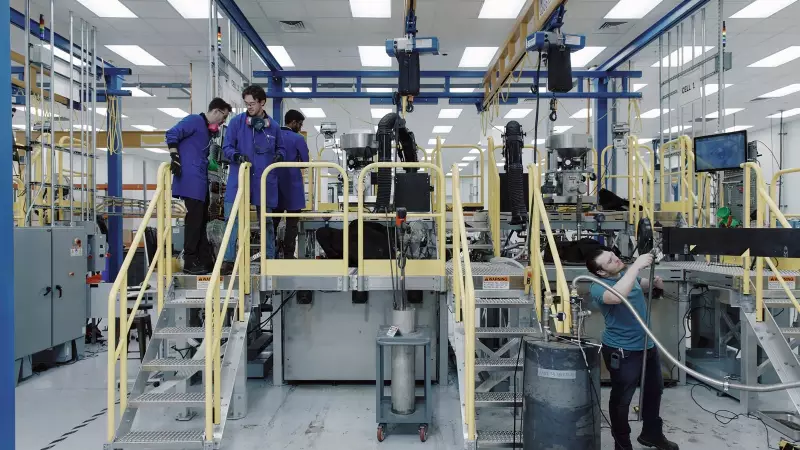
Noveon's innovative approach does not involve traditional mining. Instead, the company focuses on recycling and reprocessing existing neodymium magnets found in discarded hard disk drives and other electronic waste. Their proprietary technology involves slicing, coating, and reassembling these magnets into new, high-performance units suitable for modern applications. This process, according to Dunn, is not only commercially viable but also significantly more environmentally friendly than extracting and processing new ore.

Noveon's Recycling-First Model
Operating from a facility in San Marcos, Texas, Noveon has already begun commercial-scale production. The company sources its raw material from e-waste recyclers, creating a sustainable supply loop. Their first major customer is Hockey Sticks, a manufacturer of electric bicycle motors, demonstrating real-world industrial application. The startup's progress has attracted attention and funding, including a recent $675,000 grant from the US Department of Defense to explore applications in national security systems.
The timing of Noveon's rise is crucial. Global demand for rare earth magnets is projected to skyrocket, driven by the worldwide transition to clean energy and electric mobility. Governments in the West are actively seeking to diversify their supply chains away from China for reasons of economic security and resilience. Noveon's model offers a potential pathway to greater independence, turning a waste problem into a strategic resource solution.
Challenges and the Road Ahead
Despite the promise, the road ahead for Noveon and similar ventures is steep. Scaling a recycling-based supply to meet massive global demand is a formidable challenge. China's dominance is built on decades of investment, integrated supply chains, and lower production costs. Furthermore, the technical hurdle of efficiently collecting and processing vast quantities of end-of-life products containing rare earth magnets remains significant.
However, the geopolitical winds are shifting. The United States, through initiatives like the Defense Production Act, is incentivizing domestic production of critical materials. Countries are increasingly viewing secure access to rare earths as a matter of national security, not just economic policy. This creates a favorable environment for alternative solutions like the one Noveon is developing.
The success of such startups could have profound implications. It could reduce the strategic leverage China holds in technology and trade disputes. For nations like India, which also relies heavily on imports for these materials, supporting or emulating such recycling technologies could be key to securing its own green energy and technology ambitions. The race to break the rare earth monopoly is, ultimately, a race for technological and economic sovereignty in the 21st century.