

US Tariff Reduction Sparks Export Revival for Indore's Leather Sector
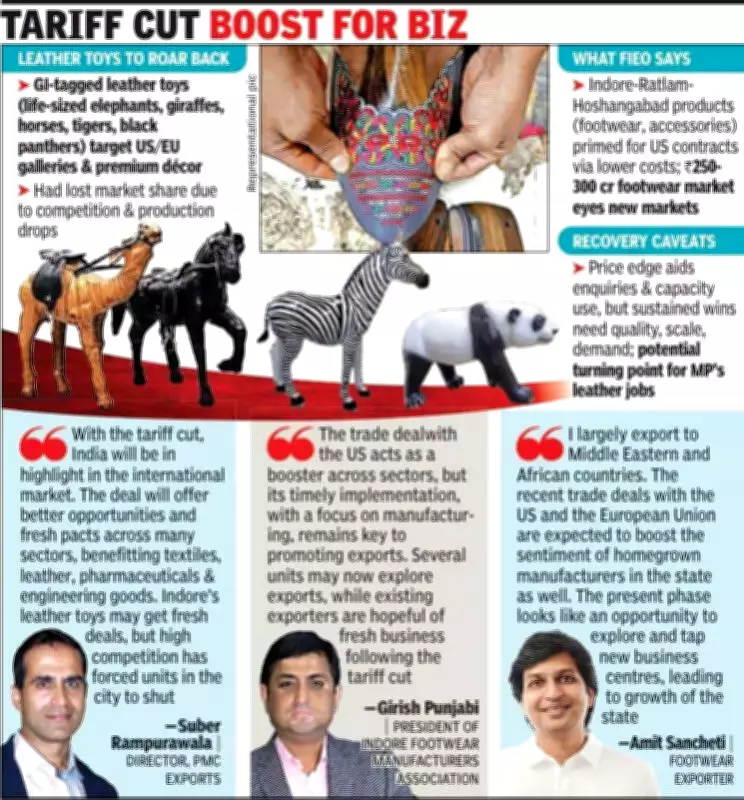
The recent reduction of United States reciprocal tariffs on Indian goods to 18 percent from the previous 50 percent is generating significant optimism across Indore's traditional leather industry. This crucial policy shift is anticipated to revive export sentiment, particularly for the city's globally recognized leather toy segment, which has faced slowing overseas orders in recent years.
GI-Tagged Leather Toys: A Premium Export Product
Indore's Geographical Indication (GI) tagged leather toys, including meticulously handcrafted life-sized elephants, giraffes, horses, tigers, and black panthers, have long served premium décor markets and galleries in the United States and Europe. These regions remain the principal global markets for such distinctive artisanal products.
Leather toys represent one of the few Madhya Pradesh items to receive coveted geographical indication status. Despite this recognition, the segment has gradually lost market share amid rising international competition and a sharp decline in domestic production capacity.

Industry Voices: From Despair to Cautious Optimism
Indore-based exporter Suber Rampurwala expressed measured optimism about the tariff reduction's potential impact. "At the 50 percent tariff level, there were virtually no buyers from the United States. With duties now reduced to 18 percent, we at least anticipate some revival in demand," Rampurwala stated. "However, it's important to acknowledge that the production volume of leather toys has declined sharply in recent years across the city."
Broader Impact on Central India's Leather Industry
According to the Federation of Indian Export Organisations (FIEO), leather products from Indore, Ratlam, and Hoshangabad—including footwear, accessories, and finished leather—are well positioned to convert renewed US enquiries into sustainable long-term export contracts. The lower tariffs directly reduce landed costs for American buyers and significantly improve buyer confidence in Indian leather products.
Indore's substantial footwear industry, estimated at Rs 250–300 crore, is also expecting renewed traction from overseas markets following the tariff adjustment. Footwear manufacturers indicate that the improved trade conditions may encourage them to explore and tap into new international markets beyond their traditional strongholds.
Challenges and Future Prospects
Industry players emphasize that improved price competitiveness could support fresh export enquiries, better capacity utilization, and gradual recovery in export volumes from central India's leather manufacturing base. However, exporters have cautioned that sustained gains will depend on multiple factors including consistent quality compliance, production scale, and stable global demand patterns.
Despite these challenges, the tariff reset is being viewed as a potential turning point for labour-intensive leather toys and footwear manufacturing in Madhya Pradesh. The policy change offers an opportunity to regain visibility in the crucial US market and stabilize export-linked employment across the region's leather sector.
The broader implications of the US-India trade agreement on various industrial sectors in Madhya Pradesh continue to be monitored by industry analysts and economic observers.






